In This Blog
Get tips, updates & exclusives—no spam


BLOGS
EVs in the Hills: A Practical Guide to Driving, Charging, and Managing Range
Ev Trip Planning
Ev Charging

EVs in the Hills: A Practical Guide to Driving, Charging, and Managing Range
Taking your electric vehicle into the hills can be one of the most rewarding ways to travel. Winding roads, scenic routes, and quieter drives make for an unforgettable road trip.
But mountain driving also requires a different approach.
Unlike flat highways, hilly terrain can significantly change how your EV uses energy. Steep climbs demand more power, while descents offer opportunities to recover energy through regenerative braking. Charging infrastructure may also be less predictable in remote areas.
The good news? With the right preparation and driving habits, you can enjoy a smooth and stress-free EV road trip through the hills.
Here’s everything you need to know.
1. Charge Before You Start the Climb
The most important rule for hill driving is simple: start your climb with enough charge.
Uphill driving requires more energy because your EV is working against gravity. A route that looks short on a map can consume considerably more battery than the same distance on a flat road.
Whenever possible, begin a major ascent with a healthy state of charge. For long or steep climbs, starting at 80% or more can give you a useful buffer.
This is especially important when travelling through remote mountain areas where the next charging station may not be nearby.
Before you leave, ask yourself:
- Where is the next charging station?
- How much battery will I have when I reach it?
- Is there another charger available if the first one is unavailable?
- Do I have enough charge to reach a backup location?
A little planning before the climb can prevent a lot of stress later.
2. Use Eco Mode When You Can
Most EVs offer different driving modes, and Eco Mode can be useful during long hill drives.
Eco Mode generally helps reduce aggressive power delivery and encourages smoother energy consumption. While it may reduce the instant performance you feel under acceleration, it can help you drive more efficiently.
This is particularly useful when:
- You are travelling long distances
- You are trying to preserve battery charge
- You are driving through a series of climbs
- You have a long route between charging stops
The goal is not to drive slowly. The goal is to avoid unnecessary bursts of energy.
3. Smooth Acceleration Is Better Than Aggressive Throttle
Mountain roads can tempt you to accelerate hard, especially when climbing steep sections.
But repeated aggressive acceleration can consume energy quickly.
Instead, try to maintain a steady pace wherever road and traffic conditions allow. Smooth acceleration and gradual changes in speed are generally more efficient than constantly accelerating and braking.
Think of it this way:
Cruise, don't sprint.
Maintaining momentum helps you avoid wasting energy on unnecessary speed changes.
Of course, safety always comes first. On steep roads, hairpin bends, or roads with heavy traffic, your speed should always be appropriate for the conditions.
4. Use Regenerative Braking on Descents
One of the biggest advantages of driving an EV in hilly terrain is regenerative braking.
When your EV slows down, the electric motor can work as a generator and send some energy back to the battery. This is especially useful during downhill sections.
Depending on your EV, you may be able to use:
- Strong regenerative braking
- One-pedal driving
- Adjustable regeneration levels
- B-mode or similar driving modes
Using stronger regeneration on suitable descents can help recover energy while also reducing the need to rely heavily on the physical brakes.
However, regenerative braking is not a substitute for safe braking. Always use the brake pedal when necessary and follow your vehicle manufacturer's recommendations.
5. Never Shift Into Neutral While Going Downhill
It may seem tempting to shift into Neutral while descending to “coast” downhill.
But in an EV, this can prevent the motor from recovering energy through regenerative braking. It can also increase your reliance on the physical brakes.
Long downhill stretches can put significant heat into the braking system, especially when the vehicle is repeatedly slowed down using the friction brakes.
Instead, keep the vehicle in the appropriate drive mode and use regenerative braking as intended.
Downhill doesn't have to mean wasted energy.
With the right settings, your descent can help recover some energy for the journey ahead.
6. Pre-Condition Your Cabin Before You Leave
Heating or cooling the cabin uses energy.
If your EV supports cabin pre-conditioning, use it while the vehicle is still connected to a charger at home, your hotel, or another charging location.
This allows the vehicle to bring the cabin to a comfortable temperature before you start driving, reducing the amount of battery energy used for climate control during the initial part of your journey.
For a road trip, that means more of your battery can be used for moving the vehicle.
A simple habit can make a difference:
Plug in. Pre-condition. Then drive.
7. Don't Assume Chargers Will Be Available in Remote Areas
One of the biggest mistakes you can make on a mountain EV trip is assuming that a charger will always be available when you need one.
Remote hill stations may have fewer charging options than major cities and highways. Some locations may have limited charging capacity, while others may not have a fast charger nearby at all.
Before starting your trip:
- Check charging stations along your route.
- Identify where you plan to stop.
- Check the distance between charging locations.
- Keep a healthy battery buffer.
- Identify a backup charging option wherever possible.
This is where route planning becomes just as important as driving technique.
8. Plan Your Charging Stops Before the Trip
A successful EV road trip is not just about knowing how far your car can travel.
It is about knowing where you can charge along the way.
Use the IONAGE app to discover charging stations along your route and plan your stops before heading into the hills.
With access to 73+ charging networks and 17,500+ charge points, IONAGE helps EV drivers discover charging options and plan their journeys with greater confidence.
Before leaving, check:
- Charging station locations
- Availability
- Your expected battery level at each stop
- Nearby alternatives
- The distance to your next charging opportunity
Because when you're driving through the hills, the best charging stop is the one you planned before you needed it.
9. Keep a Healthy Battery Buffer
Mountain routes can be unpredictable.
Unexpected traffic, steep climbs, detours, weather conditions, or a longer-than-expected route can all affect your energy consumption.
That's why it is better not to plan your journey around reaching a charger with only a few kilometres of range remaining.
A healthy buffer gives you flexibility.
It can help you:
- Reach an alternate charger
- Handle unexpected detours
- Manage increased energy consumption on steep climbs
- Avoid unnecessary range anxiety
The more remote the route, the more important your buffer becomes.
10. Your EV Road Trip Checklist
Before heading into the hills, remember:
DO:
- Charge before a major climb
- Start with a healthy battery buffer
- Use Eco Mode when appropriate
- Accelerate smoothly
- Use regenerative braking on descents
- Pre-condition the cabin while plugged in
- Plan your charging stops in advance
- Check charger availability along your route
DON'T:
- Start a major climb with a low state of charge
- Aggressively accelerate throughout the route
- Shift into Neutral while going downhill
- Rely only on your vehicle's flat-road range estimate
- Assume a charger will be available in a remote location
- Leave without a backup charging plan
Frequently Asked Questions
1. Does driving uphill reduce EV range?
Yes. Steep climbs generally require more energy because the vehicle is working against gravity. How much range is affected depends on factors such as the gradient, driving style, speed, vehicle weight, weather, and road conditions. This is why it is important to begin long climbs with sufficient charge and maintain a healthy battery buffer.
2. Does regenerative braking charge an EV while going downhill?
Yes. During suitable downhill sections, regenerative braking can convert some of the vehicle's kinetic energy back into electrical energy and send it to the battery. Using stronger regeneration or one-pedal driving, where appropriate for your vehicle and the road conditions, can help recover energy while reducing reliance on the physical brakes.
3. How should I plan an EV trip to a remote hill station?
Before starting your trip, check charging stations along your route, identify your planned charging stops, and keep a backup option wherever possible. Avoid relying solely on your vehicle's estimated range, as steep climbs and changing road conditions can increase energy consumption. Use IONAGE to discover charging stations and plan your charging stops before heading into the hills.
Final Thoughts
Driving an EV through the hills is not something you need to avoid.
You simply need to approach it differently.
Charge before the climb. Drive smoothly. Use regeneration on descents. Keep a healthy battery buffer. And most importantly, plan your charging stops before you start your journey.
With a little preparation, mountain roads can become some of the most enjoyable routes to explore in an EV.
Planning your next EV road trip? Download the IONAGE app and find charging stations along your route. Link in bio.
Charge smart. Climb fearless.
As the world shifts gears toward a more sustainable future, the way we drive is changing—fast. Are you in the market for an EV? In your research, you might have come across different EV and Hybrid technologies from various manufacturers. Was it confusing or complex? We are here to de-mystify and help in your decision.
No worries—we’re here to break it down! Let’s explore the key differences between Electric Vehicles (EVs) and Hybrid Vehicles, so you can make the right choice.
What is the deal with electric vehicles (EV’s)
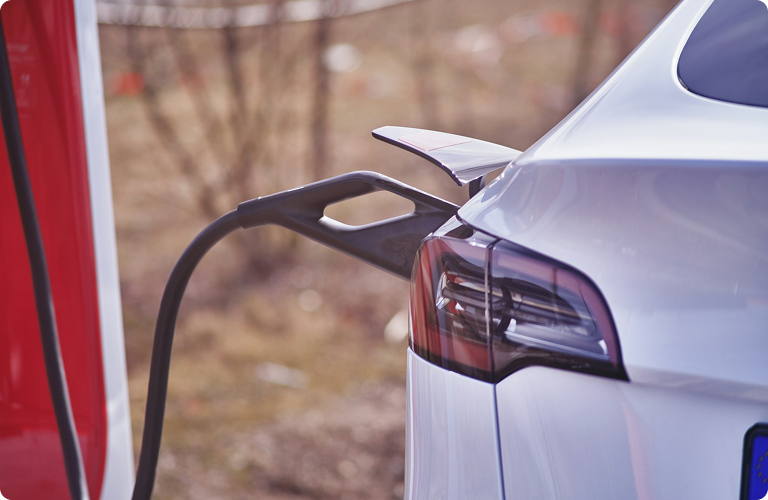
Electric vehicles run purely on electricity and are powered by rechargeable batteries that run the electric motor. That’s it. Here are a few reasons that give EVs an unfair advantage:
- Modern Design and Ownership: EVs have changed the fundamentals of the vehicle. You see a much more modern aesthetic and design for EVs. Additionally, this helps EV manufacturers develop innovative ways of ownership such as the MG Windsor.
- Lower Running Costs: The charge per kilometer for EVs is much lower than running on gas. Also, fewer running parts mean lesser maintenance.
- Eco-Friendly: With zero emissions, EVs are cleaner and quieter than traditional cars, contributing to reduced pollution and better air quality. Good for the planet, good for your lungs!
But it’s not all sunshine and supercharging. EVs do have some limits, especially when it comes to range. Currently, You’ll need to plan ahead if you’re going on a long road trip, but hey—that’s what apps and fast chargers are for! Then there is the question of batteries.
The Hybrid Vehicle: Best of Both Worlds?
If you're not ready to go fully electric yet, the next available option is a hybrid Vehicle. A hybrid vehicle uses a combination of gasoline and electric power to drive the vehicle. Hybrid technologies are considered a great intermediate step before the grand march toward a fully EV world. This makes them easy to recommend.
Here’s why a Hybrid Vehicle might be considered:
- Better Fuel Efficiency: Since hybrids can use electricity to supplement gasoline, they use less fuel overall—making them more efficient than traditional gas-powered cars.
- Extended Range: Worried about running out of charge? Hybrids still have gasoline backup, so you can go the distance without range anxiety.
- Familiarity: between EV and ICE, Hybrids feel like traditional fuel-powered cars but add a sustainable twist. It's just like an extension of an ICE.
Before pegging on the Hybrid Vehicle, consider the following.
- Space and Design: Hybrid Vehicles need to have batteries as well as a combustion engine. This greatly reduces space efficiency. Big boxes for the next adventure would be difficult to fit. They are also not as quiet as EVs. The design tends to be closer to traditional automotive without the advantages of the modern EV experience.
- Extended Range: Worried about running out of charge? Hybrids still have gasoline backup, so you can go the distance without range anxiety.
- Familiarity: between EV and ICE, Hybrids feel like traditional fuel-powered cars but add a sustainable twist. It's just like an extension of an ICE.
Still, for those who aren’t ready to take the full EV plunge, hybrids offer a solid first step.
Which One Should You Choose?
Ultimately, deciding between an EV and a Hybrid Vehicle comes down to your lifestyle and driving needs.
- If you’re all about cutting emissions and want the latest tech with the lowest environmental impact, go electric. You’ll be doing your part to keep the planet green while enjoying cutting-edge innovation.
- If you’re not ready to give up the flexibility of gasoline but still want to reduce your carbon footprint, a hybrid might be the perfect compromise.
At Ionage Technologies, we believe in the power of choice—because there’s no one-size-fits-all answer when it comes to sustainable driving. Whether you choose a full EV or a hybrid, both options represent a step toward a cleaner, smarter future.
Wrapping it up: the road ahead
As EV charging infrastructure grows and technology improves, the gap between electric and hybrid vehicles is closing fast. More people are embracing electric mobility, and the future looks bright. Whichever path you choose, it’s clear that sustainable mobility is the destination.
Ready to make your move? Join us on the journey to electrify the roads and drive toward a greener tomorrow.