In This Blog
Get tips, updates & exclusives—no spam


BLOGS
How EV Charging Operators in India Can Improve Low Utilisation of Charging Stations
CPO
How EV Charging Operators in India Can Improve Low Utilisation of Charging Stations
The electric vehicle (EV) revolution in India is no longer a distant dream, it is happening now. From the bustling streets of Bengaluru to the expanding expressways connecting Delhi and Mumbai, green number plates are becoming a familiar sight. To support this transition, Charge Point Operators (CPOs) have aggressively expanded their footprints, installing thousands of chargers across the country.
However, beneath the headline-grabbing expansion numbers lies a challenging reality: low utilisation rates. Many public charging stations in India operate at utilisation rates below 15%, meaning the chargers are idle for the majority of the day. This creates a precarious business model where high CAPEX investments struggle to generate sufficient daily revenue to cover OPEX and deliver a healthy ROI.
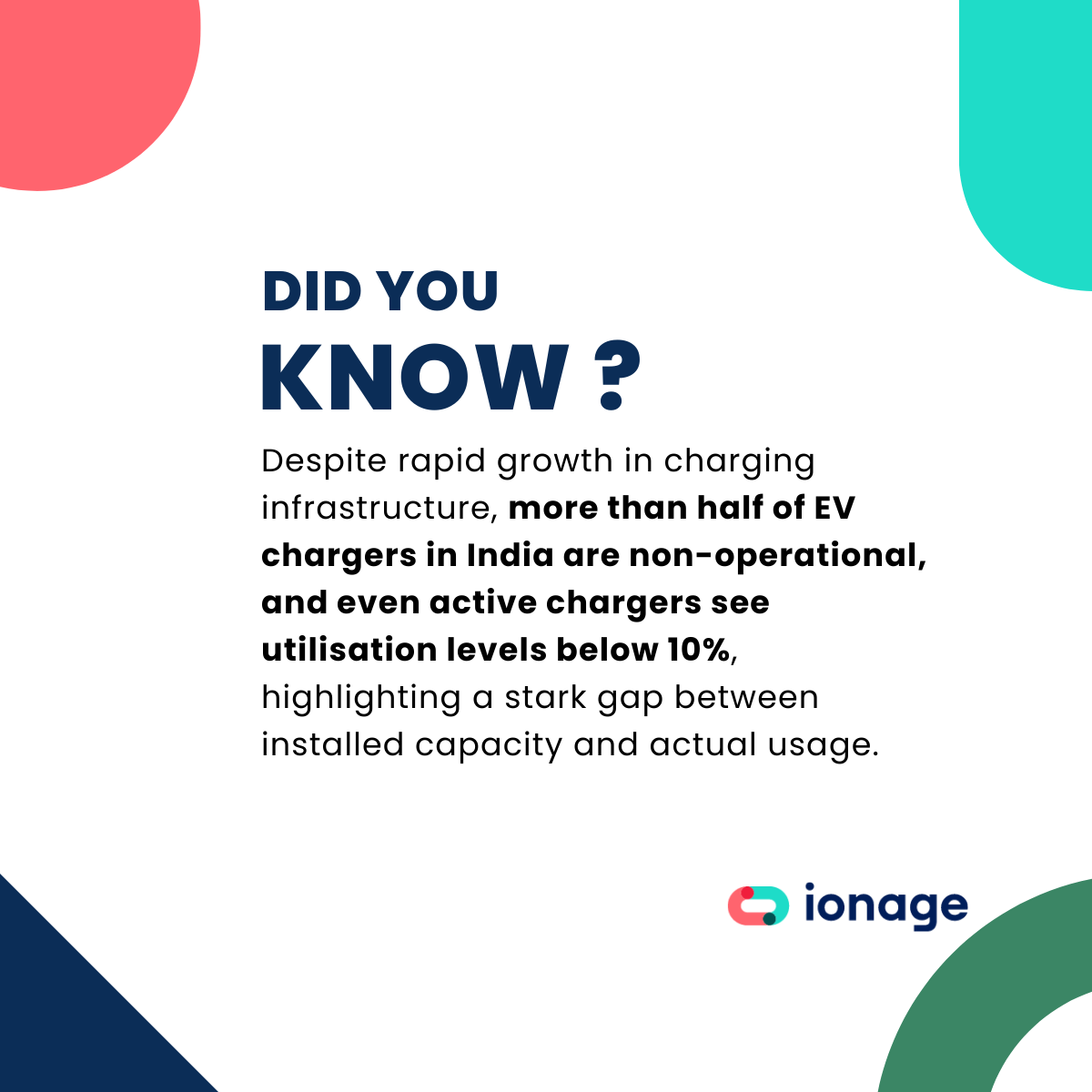
In fact, despite rapid growth in charging infrastructure, more than half of EV chargers in India are non-operational, and even active chargers see utilisation levels below 10%, highlighting a stark gap between installed capacity and actual usage (Financial Express).
Low utilisation is not just an operator problem; it is an ecosystem problem. If chargers aren't used, they become financially unviable, leading to poor maintenance and, eventually, stranded assets. The good news is that low utilisation is rarely a result of a lack of EVs; it is usually a result of friction in the charging experience.
This blog explores the root causes of low utilisation and outlines actionable strategies, including leveraging the IONAGE ecosystem, to turn idle chargers into profitable assets.
Why Utilisation Rates Are Low in India
To fix the problem, we must first diagnose it. While it is easy to blame "not enough EVs on the road," data suggests the bottlenecks are often operational or technological:
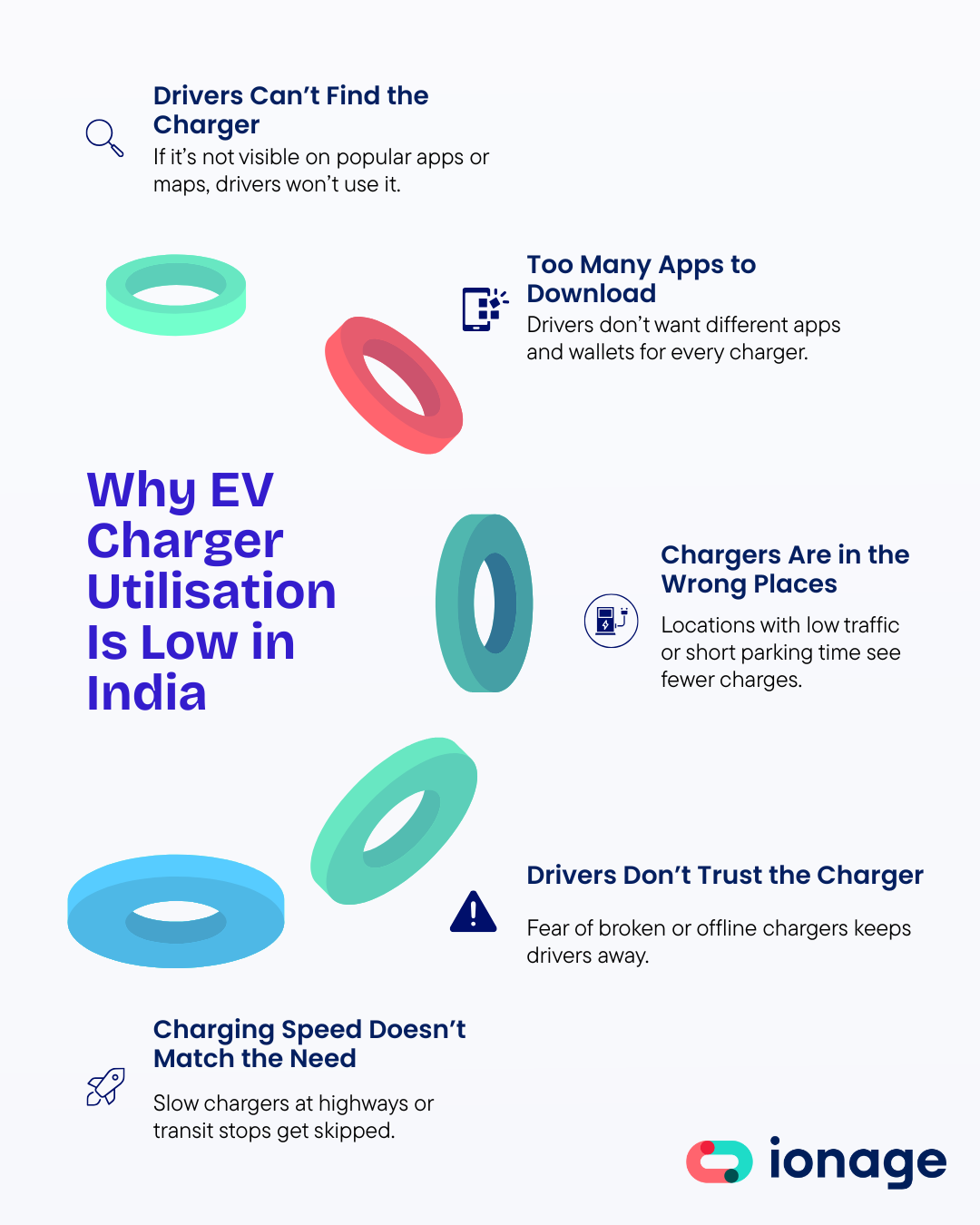
Discoverability Issues: If a driver cannot find your charger on their preferred map or app, that charger effectively does not exist.
The Walled Garden Effect: India has dozens of charging apps. Drivers find it frustrating to download, register, and maintain balances in multiple wallets to access different networks.
Misaligned Locations: Chargers placed in areas with low dwell time or low traffic volume naturally see fewer sessions.
Uptime Anxiety: The fear of arriving at a broken or offline charger makes drivers stick to the few stations they know work, leaving others underutilised.
Incompatible Hardware: Installing slow AC chargers at highway stops where drivers need quick top-ups results in skipped opportunities.
Addressing these friction points is the key to unlocking higher throughput and converting idle infrastructure into profitable assets.
Improve Discoverability Across Apps & Platforms
In the digital age, visibility equals revenue. A common mistake CPOs make is restricting the visibility of their chargers to a proprietary app. While having a dedicated app can build brand loyalty, it severely limits top-of-funnel customer acquisition.
Strategy:
- Ensure chargers are listed on major aggregators, mapping services (Google Maps, Apple Maps), and third-party EV discovery platforms.
- Provide real-time updates on charger availability, operational status, and connector types.
- Maintain accurate location data, photos, and station details to guide drivers seamlessly.
By adopting an omnichannel approach, operators can reach a wider audience of drivers who might not be aware of their stations otherwise.
Enable Roaming & Interoperability
The Indian EV market is fragmented. A driver may prefer a specific app for daily billing. If they encounter a charger from a different network that requires a new app download and KYC process for a single session, they will likely bypass it.
Strategy:
- Enable e-roaming so drivers can access chargers using any supported Mobility Service Provider (MSP) app.
- Interoperability acts like an ATM network: drivers do not need an account with every operator to use the service.
- Roaming increases utilisation by opening your network to thousands of drivers who are ready to pay for energy but aren’t direct subscribers.
Fix Uptime Before Adding More Chargers
Reliability is the ultimate currency for EV charging. A charger with high uptime will always out-earn one with frequent downtime, regardless of location.
Strategy:
- Real-Time Monitoring: Use a robust Charging Management System (CMS) to monitor 24/7 connectivity.
- Remote Diagnostics: Implement software that allows remote resets, resolving up to 70% of issues without dispatching a technician.
- Preventive Maintenance: Schedule maintenance based on usage cycles rather than waiting for breakdowns.
Reliable stations encourage repeat use and foster trust among drivers.
Optimize Charger Placement With Data
Not all locations are created equal. A residential charger requires different speed and pricing than a highway fast-charger.
Strategy:
- Move from "land grabbing" to strategic deployment using data analytics.
- Analyze dwell times, traffic patterns, and amenities to identify high-demand zones.
- Relocate underperforming assets to maximize utilisation.
- Include fleet hubs, logistics corridors, and expressway stops to tap predictable, high-volume charging sessions.
Partner With Fleets for Guaranteed Demand
While consumer demand can be sporadic, fleet demand is predictable and high-volume. Ride-hailing (BluSmart, Uber Green) and logistics (Zomato, Amazon) electrification is accelerating.
Strategy:
- Partner with fleet operators to guarantee a "base load" for chargers.
- Fleet vehicles can use stations during the day or overnight, smoothing utilisation across the network.
- Dedicated fleet slots ensure predictable revenue without compromising public accessibility.
Offer Smart, Competitive Pricing
Price sensitivity is high in India, but transparency is just as critical as cost. Hidden fees or unexpected charges erode trust.
Strategy:
- Implement time-of-day pricing to incentivise off-peak charging.
- Offer subscription plans, loyalty programs, and promotions.
- Ensure pricing on the app matches the final invoice to avoid disputes and foster confidence.
Improve Charging Speed Where It Matters
As battery sizes grow, slow charging becomes a bottleneck. A 7.4 kW AC charger at a highway stop is often unused, as drivers do not want to wait hours on a road trip.
Strategy:
- Upgrade high-turnover locations to 30–60 kW DC fast chargers.
- Match charger type to location and expected dwell time.
- Faster chargers increase throughput and satisfaction, turning underutilised stations into revenue-generating assets.
Enhance Customer Trust With Better UX
The ideal charging experience is simple: Plug in, charge, pay, and go.
Strategy:
- Smooth UPI integration and unified payments reduce friction.
- Provide clear POI details, including directions, photos, and access instructions.
- Verified stations build trust, encourage repeat use, and generate positive word-of-mouth.
Leverage Data & Analytics
You cannot improve what you cannot measure. Analytics are critical for optimisation.
Strategy:
- Analyze session trends, peak hours, abandoned sessions, and vehicle types.
- Use insights to make decisions on pricing, expansion, and maintenance schedules.
- Benchmark stations against network performance to identify high-potential improvements.
Marketing & Awareness
Even high-quality chargers require active promotion.
Strategy:
- Optimize Google Business Profiles and local SEO.
- Engage with EV owner groups via WhatsApp, Telegram, or social media.
- Highlight new or upgraded stations through app notifications and in-app promotions.
The Power of the IONAGE Ecosystem
Implementing these strategies requires robust digital infrastructure. The IONAGE Ecosystem is designed to tackle low utilisation by addressing both demand and supply.
How the IONAGE App Drives Demand
- Massive Discoverability: Drivers can find your chargers alongside 1000+ others, ensuring high visibility.
- Trip Planner: Intelligent routing recommends your station to high-intent drivers planning long trips.
- Unified Access: Eliminates app fatigue; drivers can use chargers from multiple networks without multiple downloads.
- Real-Time Trust: Provides verified status and connector details, ensuring drivers avoid broken or incompatible chargers.
How the IONAGE Platform (Nexus) Optimises Supply
- Analytics Dashboards: Granular insights into utilisation, revenue patterns, and session history.
- Network Intelligence: Helps operators decide where to expand or relocate chargers for maximum ROI.
- Operational Efficiency: Remote monitoring, alerts, and data-driven maintenance improve uptime and customer experience.
By integrating with the IONAGE ecosystem, CPOs gain visibility, reliability, and actionable intelligence, directly addressing the root causes of low utilisation.
Conclusion
Low utilisation is not a permanent state, it is a signal that your network needs optimisation. The era of “install it and they will come” is over. The new era is “optimise it, and they will stay.”
By focusing on discoverability, interoperability, data-driven placement, fleet partnerships, pricing, and fast charging, and by leveraging the dual power of the IONAGE App (for user acquisition) and Nexus Platform (for operational intelligence), CPOs can transform utilisation rates.
The Indian EV market is poised for exponential growth. Operators who solve the utilisation puzzle today will be the market leaders of tomorrow.
As the world shifts gears toward a more sustainable future, the way we drive is changing—fast. Are you in the market for an EV? In your research, you might have come across different EV and Hybrid technologies from various manufacturers. Was it confusing or complex? We are here to de-mystify and help in your decision.
No worries—we’re here to break it down! Let’s explore the key differences between Electric Vehicles (EVs) and Hybrid Vehicles, so you can make the right choice.
What is the deal with electric vehicles (EV’s)
Electric vehicles run purely on electricity and are powered by rechargeable batteries that run the electric motor. That’s it. Here are a few reasons that give EVs an unfair advantage:
- Modern Design and Ownership: EVs have changed the fundamentals of the vehicle. You see a much more modern aesthetic and design for EVs. Additionally, this helps EV manufacturers develop innovative ways of ownership such as the MG Windsor.
- Lower Running Costs: The charge per kilometer for EVs is much lower than running on gas. Also, fewer running parts mean lesser maintenance.
- Eco-Friendly: With zero emissions, EVs are cleaner and quieter than traditional cars, contributing to reduced pollution and better air quality. Good for the planet, good for your lungs!
But it’s not all sunshine and supercharging. EVs do have some limits, especially when it comes to range. Currently, You’ll need to plan ahead if you’re going on a long road trip, but hey—that’s what apps and fast chargers are for! Then there is the question of batteries.
The Hybrid Vehicle: Best of Both Worlds?
If you're not ready to go fully electric yet, the next available option is a hybrid Vehicle. A hybrid vehicle uses a combination of gasoline and electric power to drive the vehicle. Hybrid technologies are considered a great intermediate step before the grand march toward a fully EV world. This makes them easy to recommend.
Here’s why a Hybrid Vehicle might be considered:
- Better Fuel Efficiency: Since hybrids can use electricity to supplement gasoline, they use less fuel overall—making them more efficient than traditional gas-powered cars.
- Extended Range: Worried about running out of charge? Hybrids still have gasoline backup, so you can go the distance without range anxiety.
- Familiarity: between EV and ICE, Hybrids feel like traditional fuel-powered cars but add a sustainable twist. It's just like an extension of an ICE.
Before pegging on the Hybrid Vehicle, consider the following.
- Space and Design: Hybrid Vehicles need to have batteries as well as a combustion engine. This greatly reduces space efficiency. Big boxes for the next adventure would be difficult to fit. They are also not as quiet as EVs. The design tends to be closer to traditional automotive without the advantages of the modern EV experience.
- Extended Range: Worried about running out of charge? Hybrids still have gasoline backup, so you can go the distance without range anxiety.
- Familiarity: between EV and ICE, Hybrids feel like traditional fuel-powered cars but add a sustainable twist. It's just like an extension of an ICE.
Still, for those who aren’t ready to take the full EV plunge, hybrids offer a solid first step.
Which One Should You Choose?
Ultimately, deciding between an EV and a Hybrid Vehicle comes down to your lifestyle and driving needs.
- If you’re all about cutting emissions and want the latest tech with the lowest environmental impact, go electric. You’ll be doing your part to keep the planet green while enjoying cutting-edge innovation.
- If you’re not ready to give up the flexibility of gasoline but still want to reduce your carbon footprint, a hybrid might be the perfect compromise.
At Ionage Technologies, we believe in the power of choice—because there’s no one-size-fits-all answer when it comes to sustainable driving. Whether you choose a full EV or a hybrid, both options represent a step toward a cleaner, smarter future.
Wrapping it up: the road ahead
As EV charging infrastructure grows and technology improves, the gap between electric and hybrid vehicles is closing fast. More people are embracing electric mobility, and the future looks bright. Whichever path you choose, it’s clear that sustainable mobility is the destination.
Ready to make your move? Join us on the journey to electrify the roads and drive toward a greener tomorrow.