In This Blog
Get tips, updates & exclusives—no spam


BLOGS
How EV Owners Plan 800+ km Road Trips in India
Ev Charging
Ev Trip Planning
Featured

How EV Owners Plan 800+ km Road Trips in India
The 800 km EV Road Trip Is No Longer a Gamble
A few years ago, planning an 800+ km EV road trip in India felt like an expedition. Today, it’s entirely doable, but only if you approach it the right way.
India’s highway charging infrastructure has grown rapidly. Fast chargers are now available across major national highways, with networks expanding into Tier 2 cities and popular travel routes.
But here’s the truth most new EV owners miss:
The challenge was never just infrastructure, it was knowing how to use it effectively.
So what do experienced EV drivers actually do differently?
Let’s break it down.
Which Apps Do EV Owners Actually Use for Long Trips?
Seasoned EV road-trippers rarely rely on a single app. Instead, they use a small toolkit, where each app solves a specific part of the journey.
1. Route Planning Apps
Used before starting the journey
These help map charging stops based on your vehicle’s range, estimate battery consumption, and calculate trip duration.
2. Charger Discovery Apps
Used before and during the trip
They help locate chargers across highways and cities, with filters for connector types like CCS, Type 2, and CHAdeMO.
3. Live Charger Status Apps
Critical during the trip
Real-time data tells you whether a charger is available, occupied, or offline, helping you avoid wasted detours.
4. Backup Network Apps
Your failsafe
Experienced EV drivers always keep 2-3 apps installed. If one network fails, another becomes your backup.
Insight: Most long-trip issues don’t happen due to range anxiety, they happen due to single-app dependency.
What Actually Matters More Than the App: The 7-Point Strategy
Even with the best tools, execution is what makes or breaks an 800 km EV trip.
1. Always Maintain a Battery Buffer
Never drop below 15-20% SOC.
Aim to reach every charger with at least 20% remaining.
This protects you when:
- A charger is offline
- All slots are occupied
- You need to reroute
2. Always Identify Backup Chargers
Follow this rule:
1 primary charger + 2 backups, always
Before every stretch, identify alternatives within reachable range. Never depend on a single station.
3. Call Ahead for Critical Stops
For remote or less busy stations, a quick call can save hours:
- Confirm the charger is working
- Check for queues
- Identify downtime risks
This is one of the highest-impact habits experienced drivers follow.
4. Charging Strategy: Short vs Long Stops
Option A: Frequent Short Stops
- Charge: 20% → 70%
- Faster overall trip time
- Best for dense charging routes
- Healthier for battery
Option B: Fewer Long Stops
- Charge: 20% → 80–90%
- Fewer interruptions
- Better for sparse routes
👉 Most experienced drivers prefer short, frequent charges when infrastructure allows.
5. Drive Efficiently to Maximise Range
Your driving style directly impacts range:
- Maintain 80-100 km/h on highways
- Avoid aggressive acceleration
- Keep tyre pressure optimal
- Use regenerative braking smartly
6. Night Driving Needs Extra Caution
Night travel introduces risks:
- Reduced station support
- Lower charger reliability
- Safety concerns on diversions
👉 Always verify your next charger and keep backups ready before night stretches.
7. The Pre-Trip Checklist
Before starting your 800+ km journey:
- Start with 100% charge
- Apps updated and logged in
- Wallets topped up
- Charging cables onboard
- FASTag active
- Route saved with backups
- Weather & traffic checked
- Critical chargers called ahead
- Tyre pressure checked
The Better Way: One App for the Entire Journey
Most EV owners today juggle multiple apps, one for planning, one for discovery, one for payments.
It works. But it’s inefficient.
Now imagine managing your entire journey from one app.
Why IONAGE Works for Long EV Trips
IONAGE simplifies everything EV owners currently piece together manually.
Instead of switching between apps, you get a single, unified platform built specifically for long-distance EV travel in India.
Here’s what makes it powerful:
- Access 50+ charging networks across India
No more guessing which network your next charger belongs to, you’re covered across highways and cities. - Discover 14,000+ chargers in one place
From primary stops to backup options, everything is visible on a single map. - Get real-time availability and pricing
Avoid occupied or non-functional chargers before you even reach them. - Plan trips with smart route mapping
Automatically identify optimal charging stops based on your route. - Use a single wallet across networks
No multiple logins. No fragmented payments. One wallet for your entire journey.
Final Thought: 800+ km EV Trips Are Not Risky. They Are Misunderstood
The hesitation around long-distance EV travel in India isn’t about capability, it’s about clarity.
The infrastructure exists.
The chargers are there.
The tools are available.
What most drivers lack is a system.
Follow the 7-point strategy.
Always keep backup options.
Drive efficiently.
And most importantly, use a platform that connects everything together.
Do this, and an 800+ km EV trip transforms from uncertainty into confidence.
Frequently Asked Questions
Is it safe to drive 800 km in an EV in India?
Yes, with proper planning, a 15-20% battery buffer, and backup chargers, long EV trips are completely reliable.
Which is the best app for EV road trips in India?
IONAGE is one of the most comprehensive options, combining route planning, real-time availability, multi-network access, and a unified wallet.
How do I find EV charging stations on highways in India?
Use an app with real-time data and highway coverage. IONAGE provides 14,000+ charging points with live status and pricing.
How often should you stop to charge?
Typically every 150-200 km, charging from 20% to 70% for optimal trip time.
What is the best charging strategy?
Short, frequent charging sessions (20% → 70%) are ideal for well-covered routes. Use longer charges only when chargers are sparse.
As the world shifts gears toward a more sustainable future, the way we drive is changing—fast. Are you in the market for an EV? In your research, you might have come across different EV and Hybrid technologies from various manufacturers. Was it confusing or complex? We are here to de-mystify and help in your decision.
No worries—we’re here to break it down! Let’s explore the key differences between Electric Vehicles (EVs) and Hybrid Vehicles, so you can make the right choice.
What is the deal with electric vehicles (EV’s)
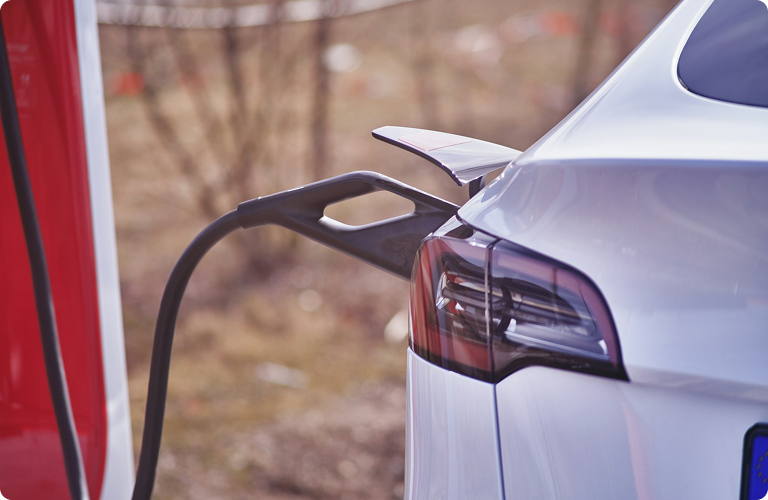
Electric vehicles run purely on electricity and are powered by rechargeable batteries that run the electric motor. That’s it. Here are a few reasons that give EVs an unfair advantage:
- Modern Design and Ownership: EVs have changed the fundamentals of the vehicle. You see a much more modern aesthetic and design for EVs. Additionally, this helps EV manufacturers develop innovative ways of ownership such as the MG Windsor.
- Lower Running Costs: The charge per kilometer for EVs is much lower than running on gas. Also, fewer running parts mean lesser maintenance.
- Eco-Friendly: With zero emissions, EVs are cleaner and quieter than traditional cars, contributing to reduced pollution and better air quality. Good for the planet, good for your lungs!
But it’s not all sunshine and supercharging. EVs do have some limits, especially when it comes to range. Currently, You’ll need to plan ahead if you’re going on a long road trip, but hey—that’s what apps and fast chargers are for! Then there is the question of batteries.
The Hybrid Vehicle: Best of Both Worlds?
If you're not ready to go fully electric yet, the next available option is a hybrid Vehicle. A hybrid vehicle uses a combination of gasoline and electric power to drive the vehicle. Hybrid technologies are considered a great intermediate step before the grand march toward a fully EV world. This makes them easy to recommend.
Here’s why a Hybrid Vehicle might be considered:
- Better Fuel Efficiency: Since hybrids can use electricity to supplement gasoline, they use less fuel overall—making them more efficient than traditional gas-powered cars.
- Extended Range: Worried about running out of charge? Hybrids still have gasoline backup, so you can go the distance without range anxiety.
- Familiarity: between EV and ICE, Hybrids feel like traditional fuel-powered cars but add a sustainable twist. It's just like an extension of an ICE.
Before pegging on the Hybrid Vehicle, consider the following.
- Space and Design: Hybrid Vehicles need to have batteries as well as a combustion engine. This greatly reduces space efficiency. Big boxes for the next adventure would be difficult to fit. They are also not as quiet as EVs. The design tends to be closer to traditional automotive without the advantages of the modern EV experience.
- Extended Range: Worried about running out of charge? Hybrids still have gasoline backup, so you can go the distance without range anxiety.
- Familiarity: between EV and ICE, Hybrids feel like traditional fuel-powered cars but add a sustainable twist. It's just like an extension of an ICE.
Still, for those who aren’t ready to take the full EV plunge, hybrids offer a solid first step.
Which One Should You Choose?
Ultimately, deciding between an EV and a Hybrid Vehicle comes down to your lifestyle and driving needs.
- If you’re all about cutting emissions and want the latest tech with the lowest environmental impact, go electric. You’ll be doing your part to keep the planet green while enjoying cutting-edge innovation.
- If you’re not ready to give up the flexibility of gasoline but still want to reduce your carbon footprint, a hybrid might be the perfect compromise.
At Ionage Technologies, we believe in the power of choice—because there’s no one-size-fits-all answer when it comes to sustainable driving. Whether you choose a full EV or a hybrid, both options represent a step toward a cleaner, smarter future.
Wrapping it up: the road ahead
As EV charging infrastructure grows and technology improves, the gap between electric and hybrid vehicles is closing fast. More people are embracing electric mobility, and the future looks bright. Whichever path you choose, it’s clear that sustainable mobility is the destination.
Ready to make your move? Join us on the journey to electrify the roads and drive toward a greener tomorrow.