In This Blog
Get tips, updates & exclusives—no spam


BLOGS
Why Do EV Drivers Need So Many Charging Apps? (And Why That's Finally Changing)
Ev Charging

Why Do EV Drivers Need So Many Charging Apps? (And Why That's Finally Changing)
You buy an EV expecting to save money on fuel.
Nobody tells you you'll also end up downloading half a dozen charging apps.
One for BPCL.
One for Hyundai.
Another for ChargeZone.
Maybe Mahindra.
Maybe Jio-bp.
Maybe Mobilane.
Before long, your phone has more EV charging apps than food delivery apps.
And that's when you realise the biggest challenge isn't charging your EV.
It's figuring out which app you need to do it.
If you've ever found yourself searching for an EV charging app or wondering why there isn't just one app for every charger, you're not alone. It's one of the biggest pain points for EV drivers in India today.
Why Isn't There Just One EV Charging App?
At first glance, it feels like there should be one app that works everywhere.
After all, you don't download a different maps app for every city or a different browser for every website.
So why is EV charging different?
The answer lies in how India's EV charging infrastructure has evolved.
Unlike petrol pumps, India's EV charging ecosystem wasn't built by one company. It has grown through dozens of Charge Point Operators (CPOs), each building its own charging network, software, payment system, and mobile application.
That approach made sense when networks were small and independent.
But as EV adoption increased, drivers started travelling beyond their home cities.
Suddenly, the charger on your route belonged to a different operator.
Which meant...
...another app.
The industry solved the problem of building chargers.
It didn't solve the problem of accessing them.
The Hidden Cost of Multiple EV Charging Apps
Most people think the biggest inconvenience is downloading another app.
It isn't.
The real cost is everything that comes after.
Imagine you're driving from Bengaluru to Mysuru for a weekend getaway. Your first charging stop is on one network. Halfway through the journey, the next available charger belongs to another. On your way back, you find a faster charger, but it requires a third app.
Or picture a road trip from Delhi to Jaipur. You plan your charging stops in advance, only to realise that the charger you want to use is available through a completely different charging network.
That's another app to download before you can even start charging.
The same story repeats on routes like Mumbai to Pune or Chennai to Coimbatore, where you'll often come across charging stations operated by different Charge Point Operators.
Now you're juggling three different apps.
Three different logins.
Three different payment experiences.
Sometimes three different customer support numbers.
None of these things help you reach your destination.
They're simply friction that comes with charging an EV today.
Then there are the smaller frustrations almost every EV driver has experienced.
You arrive at a charging station only to find it's occupied.
The charger you were planning to use doesn't appear in the app you're currently using because it's operated by another network.
A payment doesn't go through.
You have money sitting in multiple wallets across different charging apps.
You spend more time figuring out which app to use than actually charging your car.
None of these problems exist because EVs are difficult.
They exist because India's charging infrastructure is growing faster than its interoperability.
The Industry Doesn't Need More Apps. It Needs Better Connectivity.
Here's the interesting part.
The solution isn't asking every charging network to shut down its app.
Every network has its own customers, operations, and business model.
The real solution is making different charging networks work together.
Think about how UPI transformed digital payments in India.
You don't ask which bank someone uses before sending money.
Different banks work together through one interoperable system.
That's exactly where EV charging needs to go.
Instead of forcing drivers to adapt to every charging network, charging networks should become easier to access through one connected experience.
That's where EV charging aggregation comes in.
What Is an EV Charging Aggregator?
An EV charging aggregator brings multiple charging networks together on a single platform.
Instead of opening different apps to discover different chargers, drivers can access chargers from multiple networks in one place.
That means:
- More charging options
- Fewer apps to manage
- Easier charger discovery
- Simpler trip planning
- A more consistent charging experience
Aggregation doesn't replace charging networks.
It connects them.
And for EV drivers, that's a much bigger advantage.
How IONAGE Is Simplifying EV Charging
At IONAGE, we've always believed that EV drivers shouldn't have to think about who owns a charger.
They should simply be able to find one, navigate to it, and start charging.
That's why IONAGE brings together 73+ charging networks on a single platform, with new networks being added regularly.
But here's something important.
We're not going to claim that IONAGE is the only EV charging app you'll ever need.
Not yet.
India's EV charging ecosystem is still evolving, and not every charging network is integrated with every platform. There may still be an occasional charger that requires a separate app.
What IONAGE does today is significantly reduce that complexity.
Every new charging network added to IONAGE is one less app you need to download.
Five or six charging apps become two.
Two become one.
That's the direction the industry is moving towards, and we're helping accelerate that shift.
Today, IONAGE gives drivers access to 73+ charging networks and over 17,000 charge points across India. Whether you're commuting within your city or planning a road trip, there's a much better chance you'll find the charger you need without switching between multiple apps.
Our vision isn't to own every charger in India.
It's to make charging networks feel like one connected ecosystem, regardless of who owns the charger.
Because EV drivers shouldn't have to care which company operates the charger.
They should only care that they can find it, reach it, and charge without unnecessary friction.
Better Charging Starts Behind the Scenes
Most EV drivers only see the app.
What they don't see is everything happening behind it.
Every charging station you discover inside an app depends on the quality of data shared by the charging network.
Is the charger online?
Is it available?
Is it working?
If that information isn't updated in real time, drivers waste time driving to chargers they can't use.
This is where better charging management makes a real difference.
IONAGE also powers charging operators through IONAGE Nexus, our Charge Point Management System (CPMS).
When charging operators have better visibility into their chargers, drivers benefit too.
More accurate charger status.
Better uptime.
Faster issue detection.
Greater confidence before starting a journey.
Better charger management doesn't just help charging operators.
It creates a better charging experience for every EV driver.
The Road Ahead
India's EV charging infrastructure is growing rapidly.
New charging stations are being added every month.
New charging networks are expanding into more cities.
More people are switching to electric vehicles than ever before.
As the ecosystem grows, interoperability becomes even more important.
Drivers don't benefit from having more apps.
They benefit from having better access.
The future isn't about one company owning every charger.
It's about making hundreds of charging networks work together so drivers enjoy one seamless charging experience.
That's the future IONAGE is helping build.
One platform.
73+ charging networks.
17,000+ charge points.
And every new network that joins brings EV drivers one step closer to a future where charging is as simple as paying through UPI.
Frequently Asked Questions
What is an EV charging app?
An EV charging app helps drivers find public EV charging stations, navigate to them, check charger availability, make payments, and start charging. Some apps only support a single charging network, while aggregator platforms like IONAGE bring together multiple charging networks in one app.
Why do I need multiple EV charging apps in India?
India has multiple Charge Point Operators, and many of them have their own apps. If you're travelling across cities or using different charging networks, you may need more than one app. Aggregator platforms like IONAGE reduce this complexity by bringing together 73+ charging networks on one platform.
Is there one EV charging app that works everywhere?
Not yet. No single app currently covers every public EV charger in India. However, IONAGE already provides access to 73+ charging networks and more than 17,000 charge points, with new networks being added regularly. For many drivers, that significantly reduces the need to switch between multiple apps.
How do I find EV charging stations near me?
You can use the IONAGE app to discover EV charging stations across multiple charging networks, check charger details, view availability, and navigate directly to your preferred charging location.
The Bottom Line
India doesn't need another EV charging app.
It needs fewer of them.
The future of EV charging isn't about asking drivers to download more apps.
It's about making hundreds of charging networks feel like one connected ecosystem.
That's exactly what IONAGE is building.
One platform.
73+ charging networks.
17,000+ charge points.
And every new network added brings us one step closer to a future where charging your EV is as simple as finding the nearest fuel station.
Download the IONAGE app and spend less time switching between apps, and more time enjoying the drive.
As the world shifts gears toward a more sustainable future, the way we drive is changing—fast. Are you in the market for an EV? In your research, you might have come across different EV and Hybrid technologies from various manufacturers. Was it confusing or complex? We are here to de-mystify and help in your decision.
No worries—we’re here to break it down! Let’s explore the key differences between Electric Vehicles (EVs) and Hybrid Vehicles, so you can make the right choice.
What is the deal with electric vehicles (EV’s)
Electric vehicles run purely on electricity and are powered by rechargeable batteries that run the electric motor. That’s it. Here are a few reasons that give EVs an unfair advantage:
- Modern Design and Ownership: EVs have changed the fundamentals of the vehicle. You see a much more modern aesthetic and design for EVs. Additionally, this helps EV manufacturers develop innovative ways of ownership such as the MG Windsor.
- Lower Running Costs: The charge per kilometer for EVs is much lower than running on gas. Also, fewer running parts mean lesser maintenance.
- Eco-Friendly: With zero emissions, EVs are cleaner and quieter than traditional cars, contributing to reduced pollution and better air quality. Good for the planet, good for your lungs!
But it’s not all sunshine and supercharging. EVs do have some limits, especially when it comes to range. Currently, You’ll need to plan ahead if you’re going on a long road trip, but hey—that’s what apps and fast chargers are for! Then there is the question of batteries.
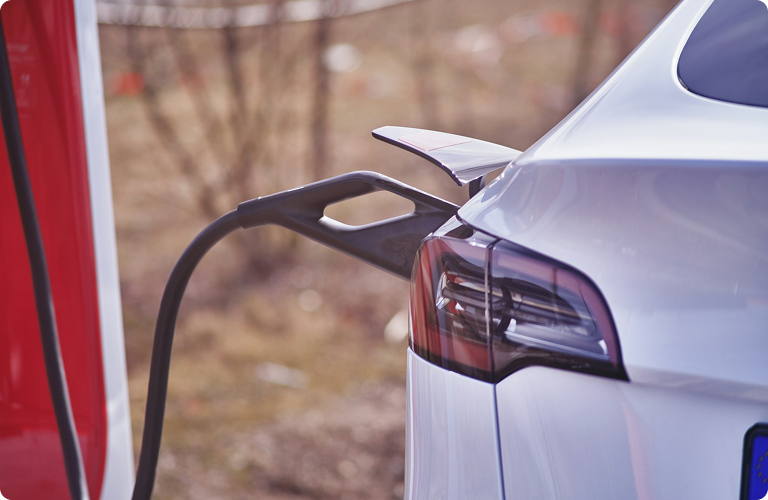
The Hybrid Vehicle: Best of Both Worlds?
If you're not ready to go fully electric yet, the next available option is a hybrid Vehicle. A hybrid vehicle uses a combination of gasoline and electric power to drive the vehicle. Hybrid technologies are considered a great intermediate step before the grand march toward a fully EV world. This makes them easy to recommend.
Here’s why a Hybrid Vehicle might be considered:
- Better Fuel Efficiency: Since hybrids can use electricity to supplement gasoline, they use less fuel overall—making them more efficient than traditional gas-powered cars.
- Extended Range: Worried about running out of charge? Hybrids still have gasoline backup, so you can go the distance without range anxiety.
- Familiarity: between EV and ICE, Hybrids feel like traditional fuel-powered cars but add a sustainable twist. It's just like an extension of an ICE.
Before pegging on the Hybrid Vehicle, consider the following.
- Space and Design: Hybrid Vehicles need to have batteries as well as a combustion engine. This greatly reduces space efficiency. Big boxes for the next adventure would be difficult to fit. They are also not as quiet as EVs. The design tends to be closer to traditional automotive without the advantages of the modern EV experience.
- Extended Range: Worried about running out of charge? Hybrids still have gasoline backup, so you can go the distance without range anxiety.
- Familiarity: between EV and ICE, Hybrids feel like traditional fuel-powered cars but add a sustainable twist. It's just like an extension of an ICE.
Still, for those who aren’t ready to take the full EV plunge, hybrids offer a solid first step.
Which One Should You Choose?
Ultimately, deciding between an EV and a Hybrid Vehicle comes down to your lifestyle and driving needs.
- If you’re all about cutting emissions and want the latest tech with the lowest environmental impact, go electric. You’ll be doing your part to keep the planet green while enjoying cutting-edge innovation.
- If you’re not ready to give up the flexibility of gasoline but still want to reduce your carbon footprint, a hybrid might be the perfect compromise.
At Ionage Technologies, we believe in the power of choice—because there’s no one-size-fits-all answer when it comes to sustainable driving. Whether you choose a full EV or a hybrid, both options represent a step toward a cleaner, smarter future.
Wrapping it up: the road ahead
As EV charging infrastructure grows and technology improves, the gap between electric and hybrid vehicles is closing fast. More people are embracing electric mobility, and the future looks bright. Whichever path you choose, it’s clear that sustainable mobility is the destination.
Ready to make your move? Join us on the journey to electrify the roads and drive toward a greener tomorrow.