In This Blog
Get tips, updates & exclusives—no spam


BLOGS
The New Playbook for EV Fleet Operations in India (2026)
Featured

The New Playbook for EV Fleet Operations in India (2026)
For years, fleet managers spoke about “going green” like it was a distant goal, something to plan for, not act on.
That era is over.
In India, 2026 marks a decisive shift. EV adoption is no longer experimental, it is operational, scalable, and central to modern logistics. With strong government support, rapid expansion of EV fleet charging stations, and rising demand from e-commerce, last-mile delivery, and mobility providers, EV fleet operations are becoming the backbone of urban and intercity logistics.
But here’s the reality most people overlook:
Switching from diesel to electric is the easy part.
The real challenge, and the real competitive advantage, lies in how you manage, scale, and optimize your EV fleet charging ecosystem.
1. From Visibility to Control in EV Fleet Charging
In earlier fleet systems, visibility was the primary focus, knowing where vehicles were, their status, and basic operational metrics.
In 2026, that is no longer sufficient.
Modern EV fleet charging management is about control, ensuring that vehicles can reliably access energy when and where they need it.
This includes:
- Coordinating charging with delivery schedules
- Reducing wait times at EV fleet charging stations
- Ensuring efficient utilization of available chargers
- Managing charging across multiple EV fleet charging hubs
For Indian fleets, this becomes even more critical. High utilization rates, tight delivery timelines, and diverse geographic operations mean that even small inefficiencies in charging can directly impact revenue.
This is where a well-structured EV fleet charging software layer becomes essential.
Instead of manually coordinating charging activities or relying on fragmented tools, fleet operators need a centralized system that ensures reliability, predictability, and efficiency.
2. The Infrastructure Shift: Charging as a Service (CaaS)
One of the biggest challenges in scaling EV fleets in India is infrastructure.
Setting up EV fleet charging hubs in-house requires:
- Significant upfront investment
- Coordination with power utilities
- Ongoing maintenance and operational oversight
For many fleet operators, this creates a barrier to rapid expansion.
This is why Charging as a Service (CaaS) is gaining strong momentum.
Under this model, fleets can:
- Access charging infrastructure without owning it
- Scale across cities without building physical assets
- Convert capital expenditure into predictable operational costs
In a market like India, where fleet expansion happens across multiple cities with varying power availability, this flexibility is critical.
By leveraging external EV fleet charging stations, operators can focus on core business operations while still ensuring reliable charging access for their fleet.
3. The Fragmentation Problem: Solved Through Aggregation
India’s charging ecosystem is growing, but it is still fragmented.
Fleet drivers often have to deal with:
- Multiple apps for different EV fleet charging stations
- Different payment systems
- Varying pricing across providers
- Limited visibility into charger availability
This creates inefficiencies that impact both operations and cost control.
This is where platforms like ours IONAGE Flo become important.
IONAGE Flo acts as a unified EV fleet charging app that aggregates multiple Charging Point Operators (CPOs) into a single platform.
With this approach, fleet operators can:
- Access a wide network of EV fleet charging stations through one interface
- Eliminate the need for multiple apps and accounts
- Gain transparent access to charging options across regions
This aggregation also helps fleets identify the best rate for EV fleet charging, allowing them to optimize costs without compromising on availability or reliability.
Instead of fragmented systems, fleets operate within a single, connected EV fleet charging management ecosystem.
4. Smarter Charging Through Visibility and Insights
A modern EV fleet charging app should go beyond access, it should provide visibility.
With platforms like IONAGE Flo, fleet operators can:
- Monitor charging behavior across vehicles
- Analyze energy consumption patterns
- Track usage across different EV fleet charging hubs
- Identify inefficiencies in charging operations
This level of insight is critical for improving EV fleet charging management at scale.
For example:
- Understanding when and where vehicles charge helps reduce congestion at popular EV fleet charging stations
- Monitoring charging behavior can help reduce idle time
- Route-level insights can improve planning and reduce unnecessary charging stops
When fleets have better visibility, they can make better decisions, leading to improved efficiency and lower operating costs.
5. Financial Efficiency: Managing EV Fleet Charging at Scale
As fleets grow, financial complexity increases.
Managing invoices, payments, and settlements across multiple EV fleet charging stations can become a major operational burden.
A robust EV fleet charging software layer helps simplify this by:
- Centralizing billing across all charging networks
- Supporting prepaid and postpaid billing models
- Automating invoicing and reconciliation
This eliminates the need to manage multiple vendor relationships individually and reduces administrative overhead.
At the same time, platforms like IONAGE Flo help fleets:
- Access the best rate for EV fleet charging across networks
- Maintain transparency in pricing
- Optimize per-kilometer energy costs
In a price-sensitive market like India, even small improvements in cost control can significantly impact margins over time.
6. The TCO Reality: Is EV Fleet Charging Cost-Effective?
The most important question for any fleet operator remains:
Is it truly cost-effective?
In India, the answer is increasingly clear.
Well-optimized EV fleet operations can deliver a 15–35% Total Cost of Ownership (TCO) advantage, particularly in urban and last-mile use cases.
This advantage comes from:
- Lower energy costs per kilometer through efficient EV fleet charging
- Reduced maintenance compared to ICE vehicles
- Improved asset utilization
- Better cost control through centralized EV fleet charging management
Electricity costs per kilometer are significantly lower than diesel, and when fleets optimize how and where they charge, these savings increase further.
Access to the best rate for EV fleet charging, combined with smart operational planning, allows fleets to maximize these benefits.
The Bottom Line
EV fleet operations in India are no longer about adoption, they are about execution.
Success today depends on how efficiently you manage charging, infrastructure, and costs across your fleet.
Fleets that:
- Use reliable EV fleet charging stations
- Operate through a unified EV fleet charging app
- Implement strong EV fleet charging management systems
- Leverage scalable EV fleet charging software
- Optimize for the best rate for EV fleet charging
- Access multiple EV fleet charging hubs through aggregated platforms
…are building more efficient, scalable, and future-ready operations.
And those that don’t?
They will face higher operational costs, fragmented systems, and limited scalability.
In 2026, winning in EV fleet operations is not about owning the most vehicles.
It’s about operating them the smartest, starting with charging.
Want to See How This Works in Practice?
If you're exploring how to simplify EV fleet charging management, reduce operational complexity, and gain better control over your charging ecosystem, it may be useful to see how platforms like IONAGE Flo can support your fleet.
You can book a quick demo to understand how a unified EV fleet charging app can help you:
- Access multiple charging networks through one platform
- Improve visibility across your EV fleet charging stations
- Optimize costs and access the best rate for EV fleet charging
- Simplify your overall EV fleet charging software stack
Book a Demo and explore how to streamline your EV fleet operations.
As the world shifts gears toward a more sustainable future, the way we drive is changing—fast. Are you in the market for an EV? In your research, you might have come across different EV and Hybrid technologies from various manufacturers. Was it confusing or complex? We are here to de-mystify and help in your decision.
No worries—we’re here to break it down! Let’s explore the key differences between Electric Vehicles (EVs) and Hybrid Vehicles, so you can make the right choice.
What is the deal with electric vehicles (EV’s)
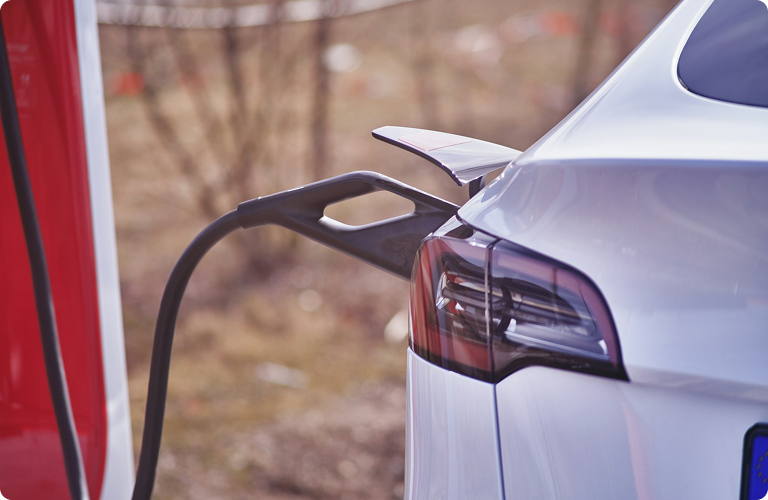
Electric vehicles run purely on electricity and are powered by rechargeable batteries that run the electric motor. That’s it. Here are a few reasons that give EVs an unfair advantage:
- Modern Design and Ownership: EVs have changed the fundamentals of the vehicle. You see a much more modern aesthetic and design for EVs. Additionally, this helps EV manufacturers develop innovative ways of ownership such as the MG Windsor.
- Lower Running Costs: The charge per kilometer for EVs is much lower than running on gas. Also, fewer running parts mean lesser maintenance.
- Eco-Friendly: With zero emissions, EVs are cleaner and quieter than traditional cars, contributing to reduced pollution and better air quality. Good for the planet, good for your lungs!
But it’s not all sunshine and supercharging. EVs do have some limits, especially when it comes to range. Currently, You’ll need to plan ahead if you’re going on a long road trip, but hey—that’s what apps and fast chargers are for! Then there is the question of batteries.
The Hybrid Vehicle: Best of Both Worlds?
If you're not ready to go fully electric yet, the next available option is a hybrid Vehicle. A hybrid vehicle uses a combination of gasoline and electric power to drive the vehicle. Hybrid technologies are considered a great intermediate step before the grand march toward a fully EV world. This makes them easy to recommend.
Here’s why a Hybrid Vehicle might be considered:
- Better Fuel Efficiency: Since hybrids can use electricity to supplement gasoline, they use less fuel overall—making them more efficient than traditional gas-powered cars.
- Extended Range: Worried about running out of charge? Hybrids still have gasoline backup, so you can go the distance without range anxiety.
- Familiarity: between EV and ICE, Hybrids feel like traditional fuel-powered cars but add a sustainable twist. It's just like an extension of an ICE.
Before pegging on the Hybrid Vehicle, consider the following.
- Space and Design: Hybrid Vehicles need to have batteries as well as a combustion engine. This greatly reduces space efficiency. Big boxes for the next adventure would be difficult to fit. They are also not as quiet as EVs. The design tends to be closer to traditional automotive without the advantages of the modern EV experience.
- Extended Range: Worried about running out of charge? Hybrids still have gasoline backup, so you can go the distance without range anxiety.
- Familiarity: between EV and ICE, Hybrids feel like traditional fuel-powered cars but add a sustainable twist. It's just like an extension of an ICE.
Still, for those who aren’t ready to take the full EV plunge, hybrids offer a solid first step.
Which One Should You Choose?
Ultimately, deciding between an EV and a Hybrid Vehicle comes down to your lifestyle and driving needs.
- If you’re all about cutting emissions and want the latest tech with the lowest environmental impact, go electric. You’ll be doing your part to keep the planet green while enjoying cutting-edge innovation.
- If you’re not ready to give up the flexibility of gasoline but still want to reduce your carbon footprint, a hybrid might be the perfect compromise.
At Ionage Technologies, we believe in the power of choice—because there’s no one-size-fits-all answer when it comes to sustainable driving. Whether you choose a full EV or a hybrid, both options represent a step toward a cleaner, smarter future.
Wrapping it up: the road ahead
As EV charging infrastructure grows and technology improves, the gap between electric and hybrid vehicles is closing fast. More people are embracing electric mobility, and the future looks bright. Whichever path you choose, it’s clear that sustainable mobility is the destination.
Ready to make your move? Join us on the journey to electrify the roads and drive toward a greener tomorrow.