In This Blog
Get tips, updates & exclusives—no spam


BLOGS
How an EV Fleet Charging Platform Solves India’s Biggest Fleet Electrification Challenges
Electric Vehicle
Fleet Charging
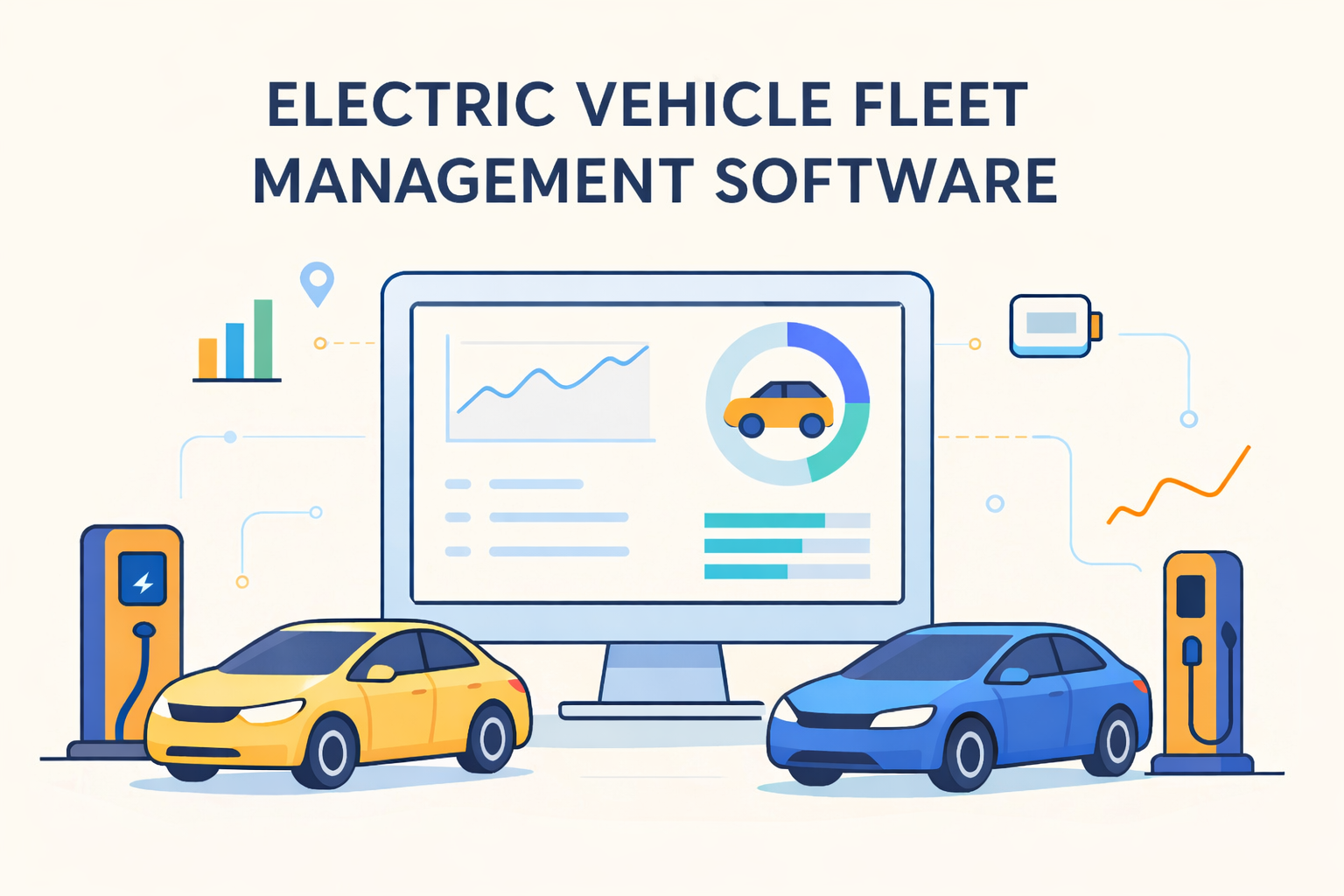
How an EV Fleet Charging Platform Solves India’s Biggest Fleet Electrification Challenges
India’s electric mobility story is accelerating. From last-mile delivery to intercity logistics, fleets are leading the charge toward electrification. Policy incentives, rising fuel costs, ESG mandates, and total cost of ownership (TCO) advantages are pushing commercial operators to transition faster than ever before.
But here’s the reality: buying electric vehicles is the easy part. Making them run efficiently, consistently, and profitably at scale is the real challenge.
Fleet electrification in India is no longer a vehicle problem. It’s a charging orchestration problem.
As charging infrastructure expands across highways, cities, and commercial hubs, a new question emerges:
How can fleets operate seamlessly across fragmented charging networks while maintaining cost control, uptime, and operational efficiency?
This is where an EV fleet charging platform becomes critical.
India’s Fleet Electrification Momentum
India is witnessing rapid growth in electric commercial vehicles across:
- E-commerce logistics
- Hyperlocal delivery
- B2B supply chains
- Intercity passenger mobility
- Corporate transport fleets
Government initiatives, state-level EV policies, and sustainability mandates have created a strong push. However, the ecosystem remains complex.
Charging stations are being installed at a fast pace. Multiple Charge Point Operators (CPOs) are expanding aggressively. OEMs are launching new electric commercial vehicles across segments.
Yet, despite this progress, fleets face persistent operational bottlenecks.
Infrastructure is scaling. Orchestration is not.
What Are the Biggest Challenges in EV Fleet Electrification in India?
1. Fragmented Charging Networks
India’s EV charging landscape is highly fragmented. Each CPO operates its own:
- App
- Tariff structure
- Access control system
- Billing model
For a fleet operating across multiple cities or states, this fragmentation creates operational chaos. Drivers often need multiple apps, multiple authentication methods, and multiple payment processes.
Expanding into a new geography means negotiating with new CPOs from scratch.
The result? Slower scale-up and increased downtime.
2. Charging Cost Inefficiencies
Fleet operators depend on predictable costs. But charging tariffs vary significantly:
- Public vs fleet pricing
- Time-of-day pricing
- Location-based price differences
Many fleets lack access to differential pricing models tailored to commercial usage. On top of that, reconciliation becomes a manual burden when transactions occur across different CPOs.
Without centralized billing and visibility, cost optimization becomes guesswork.
3. Operational Downtime
Downtime is the silent profitability killer.
Drivers may encounter:
- Charger access restrictions
- Authentication failures
- Poor uptime visibility
- Lack of real-time availability data
Even minor operational friction compounds when multiplied across hundreds of vehicles.
Unlike fuel stations, EV charging requires planning. A single failed session can disrupt route schedules and delivery timelines.
4. Lack of Actionable Data
Electrification introduces new data variables:
- Route-specific energy consumption
- Vehicle-level efficiency
- Charger utilization rates
- Idle time during charging
Yet many fleets lack a centralized system to analyze this information.
Without insights, fleets cannot answer critical questions:
- Which routes are energy-intensive?
- Which charging stations cause delays?
- Where should expansion happen next?
- How can charging costs be reduced per kilometer?
Electrification without analytics leads to inefficiency.
What Is an EV Fleet Charging Platform?
An EV fleet charging platform is a digital orchestration layer that connects fleets and charging networks through a unified system.
Unlike consumer charging apps, fleet-focused platforms are designed for:
- Aggregated network access
- Fleet-specific pricing
- Centralized payments
- Automated reconciliation
- Digital contracts
- Data analytics
- Route-based optimization
In simple terms, it transforms fragmented infrastructure into a coordinated ecosystem.
Instead of interacting separately with multiple CPOs, fleets operate through one integrated interface.
How an EV Fleet Charging Platform Solves These Challenges
.png)
1. Aggregated Network Access Across Multiple CPOs
Fragmentation is one of the biggest obstacles to fleet electrification.
An EV fleet charging platform aggregates multiple charging networks into a single marketplace. This enables:
- Access to multiple CPOs through one interface
- Geography-specific network building
- Seamless interstate operations
- Faster expansion into new routes
For fleets, this means reduced dependency on individual networks and improved charging availability across corridors.
It also introduces demand signaling, fleets can indicate where charging infrastructure is needed, encouraging CPO expansion in underserved areas.
2. Flexible Pricing and Centralized Payments
Commercial fleets require pricing flexibility.
A fleet charging platform enables:
- Differential fleet tariffs
- Negotiated commercial pricing
- Prepaid wallet models
- Postpaid billing systems
- Centralized transaction tracking
Instead of managing multiple invoices from different networks, fleets receive consolidated billing and automated reconciliation.
This improves:
- Cost transparency
- Budget predictability
- Administrative efficiency
The financial layer becomes as intelligent as the operational layer.
3. Plug-and-Play Driver Experience
Operational simplicity is critical.
Fleet platforms enable:
- Autocharge functionality
- RFID authentication
- App-based session initiation
- Charger-level access control
Drivers no longer need complex training. Charging becomes a standardized process across networks.
Reduced friction means:
- Lower downtime
- Faster turnaround
- Improved schedule reliability
The goal is simple: charging should be as effortless as refueling.
4. Data-Driven Optimization
Electrification generates rich operational data, but only if it’s captured and analyzed properly.
Fleet charging platforms provide:
- Vehicle-specific analytics
- Route-based energy consumption tracking
- Charger efficiency metrics
- Session-level cost breakdowns
- Demand hotspot identification
With these insights, fleets can:
- Optimize routes
- Reduce per-kilometer energy costs
- Identify inefficient chargers
- Plan infrastructure partnerships strategically
Electrification becomes data-led rather than assumption-driven.
5. Digital Contracts and Faster CPO Onboarding
Traditional onboarding between fleets and CPOs can take months.
Fleet charging platforms digitize this process through smart contracts that define:
- Tariff structures
- Number and type of chargers
- Guaranteed uptime
- Time-slot allocation
- Dedicated vs shared asset usage
- Payment modes
This reduces negotiation cycles and accelerates partnerships.
For CPOs, onboarding fleets becomes scalable.
For fleets, expansion becomes frictionless.
The Broader Ecosystem Impact
Fleet charging platforms don’t just benefit fleets. They strengthen the entire EV ecosystem.
For CPOs
- Faster fleet onboarding
- Higher charger utilization
- Revenue optimization
- Fleet-specific dashboards
- Predictable commercial contracts
Instead of relying solely on public charging revenue, CPOs gain structured fleet business streams.
For OEMs
- Stronger EV value proposition
- Higher fleet adoption rates
- Charging confidence for buyers
- Ecosystem differentiation
Bundling vehicles with charging access removes uncertainty for fleet buyers.
Electrification becomes a complete solution, not just a vehicle sale.
The Future of Fleet Electrification in India
India’s EV growth will increasingly depend on intelligence rather than infrastructure volume.
The next phase of electrification will focus on:
- Operational efficiency
- Cost optimization
- Network utilization
- Data-led expansion
- Ecosystem collaboration
Hardware deployment will continue, but orchestration platforms will determine profitability.
Fleet charging will shift from reactive to predictive.
Networks will evolve from isolated systems to integrated marketplaces.
Data will guide infrastructure investments.
How IONAGE FLO Enables Smarter Fleet Electrification
At the center of intelligent fleet electrification is IONAGE FLO, an advanced EV charging orchestration platform built to connect fleets, CPOs, and OEMs within a unified digital ecosystem.
IONAGE FLO is designed not just to provide charging access, but to integrate infrastructure, pricing, contracts, and operational data into a seamless, scalable framework that supports large-scale EV adoption.
Here’s how it enables smarter fleet electrification:
Aggregated Charging Marketplace
FLO provides access to multiple CPO networks through a single interface, eliminating fragmentation and enabling seamless geographic expansion.
Digital Contracts for Faster Partnerships
CPOs and fleets can discover each other and enter structured digital agreements defining tariffs, uptime commitments, access rules, utilization models, and payment terms, accelerating onboarding significantly.
Flexible Pricing Models
FLO supports both prepaid and postpaid mechanisms, enabling commercial pricing structures tailored to operational needs.
Automated Reconciliation
Charging transactions across networks are consolidated and reconciled automatically, reducing administrative complexity and improving financial visibility.
Smart Access Controls
CPOs can configure chargers as dedicated or shared assets, manage time-slot allocations, and efficiently serve multiple fleets alongside public users.
Fleet Analytics Dashboard
Vehicle-level and route-level insights empower operators to optimize energy consumption, monitor charger efficiency, reduce downtime, and plan expansion based on real demand patterns.
Demand Signaling for Infrastructure Expansion
Fleets can indicate infrastructure demand on underserved routes, encouraging strategic CPO deployment and strengthening network reliability.
Rather than operating as just another charging application, FLO functions as a coordination layer, aligning charging infrastructure with operational intelligence and commercial strategy.
Electrification Requires Orchestration
India’s EV journey is entering a decisive phase.
Vehicle adoption is accelerating. Infrastructure deployment is expanding. But sustainable fleet electrification requires more than assets — it requires alignment.
Alignment between:
- Vehicles
- Charging networks
- Pricing structures
- Operational workflows
- Data intelligence
EV charging orchestration platforms provide this connective layer.
They transform fragmentation into integration.
They convert operational complexity into clarity.
They reduce inefficiencies and unlock scalable growth.
Electrification is not simply about installing more chargers. It is about ensuring every vehicle can charge efficiently, predictably, and profitably.
Want to see how IONAGE FLO can streamline your charging operations and accelerate expansion? Book a demo with IONAGE today and discover how smarter orchestration can transform your EV fleet performance.
As the world shifts gears toward a more sustainable future, the way we drive is changing—fast. Are you in the market for an EV? In your research, you might have come across different EV and Hybrid technologies from various manufacturers. Was it confusing or complex? We are here to de-mystify and help in your decision.
No worries—we’re here to break it down! Let’s explore the key differences between Electric Vehicles (EVs) and Hybrid Vehicles, so you can make the right choice.
What is the deal with electric vehicles (EV’s)
Electric vehicles run purely on electricity and are powered by rechargeable batteries that run the electric motor. That’s it. Here are a few reasons that give EVs an unfair advantage:
- Modern Design and Ownership: EVs have changed the fundamentals of the vehicle. You see a much more modern aesthetic and design for EVs. Additionally, this helps EV manufacturers develop innovative ways of ownership such as the MG Windsor.
- Lower Running Costs: The charge per kilometer for EVs is much lower than running on gas. Also, fewer running parts mean lesser maintenance.
- Eco-Friendly: With zero emissions, EVs are cleaner and quieter than traditional cars, contributing to reduced pollution and better air quality. Good for the planet, good for your lungs!
But it’s not all sunshine and supercharging. EVs do have some limits, especially when it comes to range. Currently, You’ll need to plan ahead if you’re going on a long road trip, but hey—that’s what apps and fast chargers are for! Then there is the question of batteries.
The Hybrid Vehicle: Best of Both Worlds?
If you're not ready to go fully electric yet, the next available option is a hybrid Vehicle. A hybrid vehicle uses a combination of gasoline and electric power to drive the vehicle. Hybrid technologies are considered a great intermediate step before the grand march toward a fully EV world. This makes them easy to recommend.
Here’s why a Hybrid Vehicle might be considered:
- Better Fuel Efficiency: Since hybrids can use electricity to supplement gasoline, they use less fuel overall—making them more efficient than traditional gas-powered cars.
- Extended Range: Worried about running out of charge? Hybrids still have gasoline backup, so you can go the distance without range anxiety.
- Familiarity: between EV and ICE, Hybrids feel like traditional fuel-powered cars but add a sustainable twist. It's just like an extension of an ICE.
Before pegging on the Hybrid Vehicle, consider the following.
- Space and Design: Hybrid Vehicles need to have batteries as well as a combustion engine. This greatly reduces space efficiency. Big boxes for the next adventure would be difficult to fit. They are also not as quiet as EVs. The design tends to be closer to traditional automotive without the advantages of the modern EV experience.
- Extended Range: Worried about running out of charge? Hybrids still have gasoline backup, so you can go the distance without range anxiety.
- Familiarity: between EV and ICE, Hybrids feel like traditional fuel-powered cars but add a sustainable twist. It's just like an extension of an ICE.
Still, for those who aren’t ready to take the full EV plunge, hybrids offer a solid first step.
Which One Should You Choose?
Ultimately, deciding between an EV and a Hybrid Vehicle comes down to your lifestyle and driving needs.
- If you’re all about cutting emissions and want the latest tech with the lowest environmental impact, go electric. You’ll be doing your part to keep the planet green while enjoying cutting-edge innovation.
- If you’re not ready to give up the flexibility of gasoline but still want to reduce your carbon footprint, a hybrid might be the perfect compromise.
At Ionage Technologies, we believe in the power of choice—because there’s no one-size-fits-all answer when it comes to sustainable driving. Whether you choose a full EV or a hybrid, both options represent a step toward a cleaner, smarter future.
Wrapping it up: the road ahead
As EV charging infrastructure grows and technology improves, the gap between electric and hybrid vehicles is closing fast. More people are embracing electric mobility, and the future looks bright. Whichever path you choose, it’s clear that sustainable mobility is the destination.
Ready to make your move? Join us on the journey to electrify the roads and drive toward a greener tomorrow.