Transforming Enterprise EV Charging Across India

Company
Capgemini is a global leader in consulting, technology services, and digital transformation, with a strong commitment to sustainability and carbon reduction.As part of its green mobility initiatives, Capgemini has invested significantly in EV charging infrastructure across its campuses in India to support both employee and fleet electrification.As its EV charging network expanded across multiple cities, Capgemini needed a centralized technology and operations partner that could provide complete visibility, simplify charging operations, resolve technical issues, support employees and fleet drivers, and enable data-driven decision-making.To accelerate EV adoption and gain complete visibility into its charging infrastructure, Capgemini partnered with IONAGE on 24 April 2025.
Industry
Enterprise Mobility / Corporate EV Charging
Let’s Take the Next Step
Contact Sales26 Stations, 351 Chargers, 835 Connectors, 7 Cities, 4.02 MW Installed Capacity, 47,210 Charging Sessions, 324,805 kWh Energy Delivered
Centralized EV charging management with employee and fleet charging segregation, real-time monitoring, centralized reporting, technical issue identification, and OEM coordination.
OBJECTIVES
Capgemini wanted to build a centralized EV charging ecosystem that could support its sustainability goals while improving day-to-day charging operations across India.
The key objectives were to:
- Gain complete visibility into charging operations.
- Track energy consumption across campuses.
- Separate employee and fleet charging activity.
- Eliminate manual tracking and dependency on Excel sheets.
- Improve charger onboarding and management across multiple cities.
- Identify and resolve charger issues quickly.
- Improve charger uptime and reliability.
- Provide dedicated support for employees and fleet drivers.
- Enable real-time monitoring and analytics.
- Access centralized and downloadable reports.
- Improve coordination with charger OEMs.
- Support future EV expansion and sustainability initiatives.
- Reduce carbon emissions and accelerate EV adoption.
Challenges
Before partnering with IONAGE, Capgemini faced several operational, technical, and reporting challenges across its growing EV charging network.
1. Lack of Centralized Energy Visibility
Capgemini relied heavily on manual energy-meter readings and Excel sheets to track electricity consumption.
As the charging network expanded, this created difficulties in:
- Consolidating data from multiple locations.
- Tracking station-wise energy consumption.
- Maintaining accurate charging records.
- Generating regular reports.
- Identifying charging trends.
- Making data-driven decisions.
2. Employee and Fleet Charging Overlap
Employees and fleet drivers were using the same charging infrastructure.
This made it difficult to clearly understand:
- Employee charging consumption.
- Fleet charging consumption.
- Fleet utilization.
- Employee utilization.
- Station-wise charging demand.
- Energy consumption by user category.
Capgemini needed a solution that could provide clear visibility and separate charging activity between employees and fleet operations.
3. Multi-City and Multi-OEM Infrastructure
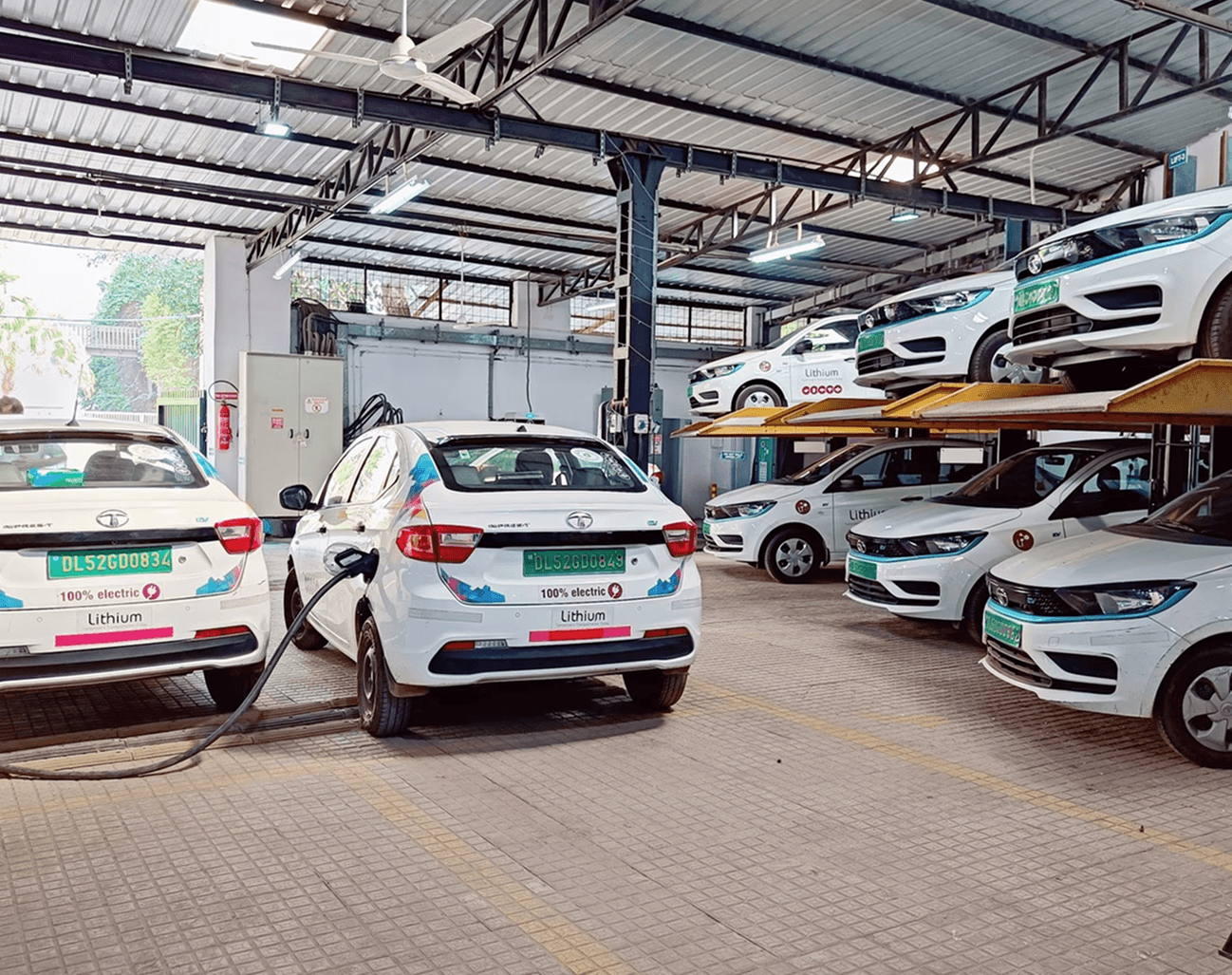
Capgemini's charging network was spread across 7 cities and 26 stations, with chargers from different OEMs.
This created operational complexity around:
- Charger onboarding.
- Charger monitoring.
- Network health.
- Technical troubleshooting.
- Firmware management.
- Communication issues.
- OEM coordination.
- Issue resolution.
4. Charger and Communication Issues
Several chargers faced technical and operational challenges, including:
- Chargers not sending meter values.
- Offline chargers.
- Outdated firmware.
- Communication issues with the CMS.
- Connectivity issues.
- Charger-specific technical problems.
Identifying the root cause and coordinating with the respective OEMs required continuous technical support and monitoring.
5. Fragmented Reporting
Capgemini needed regular and accurate charging data for operational and management-level analysis.
Previously, obtaining complete information across multiple systems was difficult, resulting in:
- Manual data collection.
- Dependency on Excel.
- Multiple data sources.
- Difficulty downloading complete reports.
- Limited station-wise visibility.
- Dlays in preparing operational reports.
IONAGE Solution
IONAGE worked closely with Capgemini to build a centralized charging ecosystem combining technology, analytics, technical support, and operational coordination.
The solution was not limited to providing a charging management platform. IONAGE's team actively supported Capgemini in identifying issues, diagnosing problems, coordinating with OEMs, supporting users, and providing centralized operational data.
1. IONAGE Nexus – Centralized Charger Management
IONAGE Nexus became the central platform for monitoring and managing Capgemini's charging infrastructure across India.
How Nexus helped Capgemini:
- Real-time charger monitoring.
- Centralized charger onboarding.
- Charger health monitoring.
- Charger status tracking.
- Firmware version tracking.
- Energy monitoring.
- Session monitoring.
- Utilization analytics.
- Station-wise performance visibility.
- Network health monitoring.
- Centralized operational data.
- Downloadable reports.
Nexus gave Capgemini a single source of truth for its charging network.
Instead of managing chargers through multiple OEM platforms, Capgemini's operations team could monitor the network centrally through IONAGE.
2. IONAGE Technical Support – Issue Identification and OEM Coordination
A key part of the IONAGE partnership was the continuous technical and operational support provided to Capgemini.
IONAGE's team actively monitored the charging network and helped identify issues across chargers and locations.
When a technical issue was identified, the team worked through the complete resolution process:
Issue Identification → Diagnostics → Logs & Reports → OEM Coordination → Resolution → Monitoring
IONAGE supported Capgemini by:
- Identifying charger issues.
- Diagnosing communication problems.
- Checking charger logs.
- Sharing relevant logs and technical reports with Capgemini.
- Providing operational reports for issue analysis.
- Identifying chargers not sending meter values.
- Identifying offline chargers.
- Identifying firmware-related issues.
- Coordinating with respective charger OEMs.
- Following up with OEM teams for resolution.
- Validating the charger after the issue was resolved.
- Continuing to monitor the charger to ensure stability.
This helped Capgemini avoid the need to independently coordinate between multiple charger manufacturers and technology platforms.
IONAGE acted as the bridge between Capgemini and charger OEMs, helping accelerate technical troubleshooting and resolution.
3. IONAGE Support Team – Employee and Fleet Driver Support
IONAGE also provided continuous operational support for Capgemini's charging users.
Whether the issue was raised by an employee or a fleet driver, the IONAGE support team was available to assist.
The support team helped with:
- Charging session issues.
- Charger availability concerns.
- Start/stop charging issues.
- User-related issues.
- Fleet charging concerns.
- Charger-related problems.
- Payment or charging-related queries where applicable.
- Escalation of technical issues.
- Coordination with the internal and OEM teams.
This provided Capgemini with a single support channel for its EV charging ecosystem.
Instead of employees, fleet drivers, and the Capgemini operations team having to independently identify the right team for every issue, IONAGE provided centralized support and coordination.
4. IONAGE Flo – Fleet Charging Management
IONAGE Flo was used to provide dedicated visibility and management for Capgemini's fleet charging operations.
How Flo helped Capgemini:
- Separate fleet charging from employee charging.
- Manage fleet charging workflows.
- Track fleet charging sessions.
- Monitor fleet energy consumption.
- Track fleet utilization.
- Generate fleet-specific reports.
- Improve visibility into fleet operations.
This helped Capgemini understand fleet charging independently from employee charging and provided better control over its fleet electrification operations.
5. IONAGE App – Employee Charging Experience
The IONAGE App provided employees with a unified digital charging experience.
How the App helped employees:
- Locate chargers.
- View charger availability.
- Start charging sessions.
- Stop charging sessions.
- View charging history.
- Track charging activity.
- Access a simplified charging experience.
This reduced dependence on multiple applications and created a more consistent charging experience for employees across Capgemini locations.
6. Centralized Reports and Analytics
One of the key improvements delivered by IONAGE was centralized access to charging data.
IONAGE provided Capgemini with centralized reports covering:
- Charging sessions.
- Energy consumption.
- Station-wise charging activity.
- Charger utilization.
- Fleet charging.
- Employee charging.
- Network performance.
- Charger performance.
- Operational data.
These reports helped Capgemini reduce dependency on manual data collection and Excel-based reporting.
The operations team could now access structured data to understand:
How much energy was consumed → Where it was consumed → Which chargers were used → How the network was performing.
Product-to-Impact
Business Impact
1. Reduced Manual Effort
IONAGE significantly reduced Capgemini's dependency on manual charging data collection and Excel-based tracking.
The platform enabled:
- Centralized charging data.
- Automated session tracking.
- Structured reports.
- Faster data access.
- Reduced manual reporting effort.
- Simplified operational workflows.
2. Complete Charging Visibility
Capgemini gained centralized visibility into its charging infrastructure across India.
The operations team could monitor:
- Charger status.
- Charging sessions.
- Energy consumption.
- Charger utilization.
- Station performance.
- Fleet charging.
- Employee charging.
- Network health.
3. Faster Issue Identification and Resolution
IONAGE's monitoring and support capabilities enabled faster identification of charger issues.
The IONAGE team:
- Identified technical issues.
- Analyzed charger logs.
- Shared reports with Capgemini.
- Coordinated with OEMs.
- Followed up on resolution.
- Verified charger performance after fixes.
This created a structured issue-resolution process and reduced the operational burden on Capgemini's team.
4. Single Point of Support
Whether the issue came from an employee, fleet driver, charger, CMS, or OEM, IONAGE provided centralized coordination and support.
This gave Capgemini a single operational partner for its charging ecosystem.
5. Better Fleet Operations
Through IONAGE Flo, Capgemini gained dedicated fleet charging visibility.
This enabled:
- Separate fleet and employee charging analytics.
- Fleet session tracking.
- Fleet energy monitoring.
- Fleet utilization analysis.
- Fleet-specific reporting.
6. Better Employee Experience
Through the IONAGE App and centralized support, employees received a simpler charging experience with access to charger availability, session management, and support when issues occurred.
7. Data-Driven Decision Making
With centralized reports, Capgemini could now analyze:
- Monthly charging sessions.
- Energy consumption.
- Station-wise charging activity.
- Charger utilization.
- Fleet performance.
- Network performance.
This enabled the operations team to move from manual data collection to data-driven EV infrastructure management.
Let’s Take the Next Step
Contact SalesKey Products that powered success

Ionage Nexus
Track utilization, monitor sessions in real-time, and control access
Maximize efficiency and revenue with smarter charging management
Learn More

Ionage APP
Charge anywhere—public or private—with one app.
Track, plan, and manage charging with real-time data.
Learn More