Driving the Future of Electric Transportation

Company
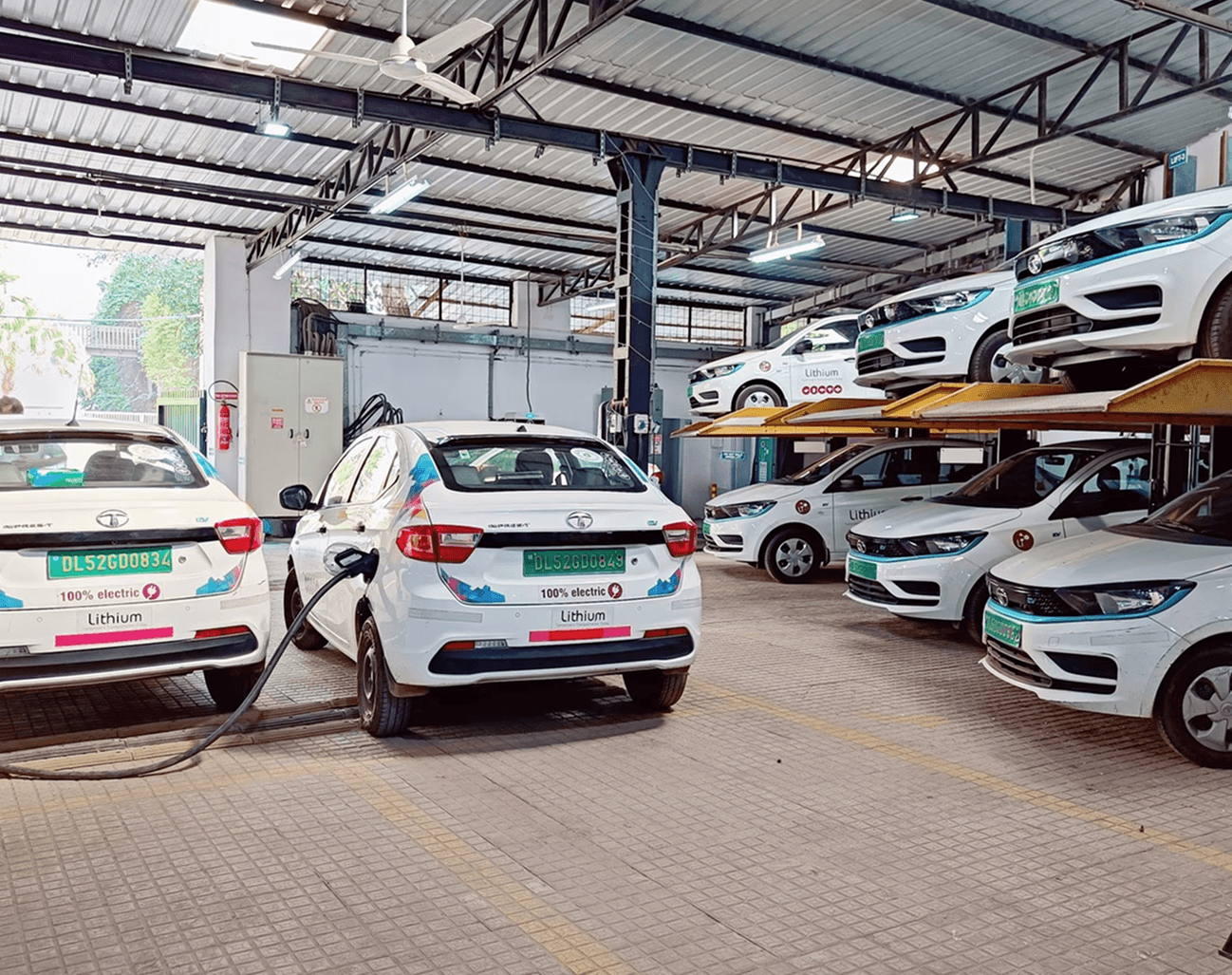
Lithium Urban Technologies is one of India's leading Mobility-as-a-Service (MaaS) companies, providing corporate employee transportation through a 100% electric fleet, proprietary optimization software, and dedicated charging infrastructure. With operations spread across major cities in India, Lithium has been at the forefront of sustainable mobility, helping enterprises transition to electric transportation while reducing their carbon footprint. As Lithium's electric fleet and charging infrastructure continued to expand, the company needed a reliable technology partner that could simplify charger operations, improve fleet visibility, strengthen charging controls, and provide seamless support across its nationwide network. On 17 March 2025, Lithium partnered with IONAGE to transform the way it managed its charging infrastructure and fleet charging operations.
Industry
Fleet Mobility / Electric Fleet Charging
Let’s Take the Next Step
Contact SalesIONAGE has been an excellent technology partner for our EV charging network. Their white-label CMS solution enabled seamless charger integration and Autocharge implementation, improving driver experience and operational insights. The team’s responsive support and continuous innovation have made IONAGE a valuable partner in our growth journey.
Manohar PS
General Manager - EVCI
1.15+ million charging sessions enabled across 56 stations and 168 chargers, delivering more than 8 GWh of clean energy
Fleet vehicle mapping through IONAGE Flo to control unauthorized charging identify which vehicle is charging at each station Track vehicle-wise and station-wise energy consumption.
OBJECTIVES
Lithium approached IONAGE with the objective of bringing its charging operations under one centralized platform while improving operational efficiency and fleet-level visibility across its growing EV ecosystem.
The team wanted to:
- Centralize charger management across India.
- Improve charger uptime and reliability.
- Gain real-time visibility into charging operations.
- Simplify fleet charging management.
- Map fleet vehicles to the charging platform.
- Prevent unauthorized vehicles from accessing fleet chargers.
- Identify which vehicle was charging at each station.
- Track vehicle-wise charging activity and energy consumption.
- Gain station-wise power and energy visibility.
- Reduce operational delays.
- Access detailed analytics and downloadable reports.
- Enable a seamless charging experience for public users.
- Support future expansion of the EV charging network.
Challenges
As Lithium expanded its charging infrastructure across multiple cities, several operational challenges started to emerge.
1. Limited Visibility Across the Network
With chargers deployed across different locations, the operations team lacked a centralized platform to monitor charger status, utilization, and performance in real time.
2. Slow CMS Support and Delayed Resolution
Managing chargers from multiple OEMs required quick issue resolution and proactive support. Delays in troubleshooting could impact daily fleet operations and charger availability.
3. Poor Charger Uptime
Maintaining charger availability across multiple hubs became increasingly challenging as the network expanded across cities and locations.
4. Lack of Analytics and Reporting
The team needed access to detailed reports on charger utilization, energy consumption, charging sessions, and station performance to make data-driven operational decisions.
5. Unauthorized Charging and Lack of Vehicle-Level Visibility
One of Lithium's key operational challenges was the inability to effectively identify and control which vehicles were using its charging infrastructure.
Since fleet vehicles were not systematically mapped to the charging platform, the operations team faced difficulty in:
- Identifying which vehicle was charging at a particular station.
- Distinguishing authorized fleet vehicles from unauthorized vehicles.
- Preventing unauthorized charging.
- Tracking charging activity against individual vehicles.
- Understanding vehicle-wise energy consumption.
- Getting clear station-wise visibility of charging activity and power consumption.
This created a need for a more controlled and vehicle-aware fleet charging solution.
6. Firmware and OEM Dependencies
Different charger manufacturers and firmware versions created operational complexities, making standardization, troubleshooting, and network-wide maintenance more difficult.
Why Lithium Chose IONAGE
After evaluating multiple charging management platforms, Lithium chose IONAGE for three key reasons.
1. Dedicated Support Team
IONAGE's support team worked closely with Lithium to resolve issues quickly, support charger operations, and ensure uninterrupted charging across locations.
2. Multi-OEM Compatibility
IONAGE seamlessly integrated chargers from different OEMs into a single platform, eliminating the need to manage multiple systems.
3. Faster Issue Resolution
With centralized monitoring, diagnostics, and operational visibility, Lithium was able to identify issues faster and improve charger uptime and operational efficiency.
Our Solution
1. Fleet Vehicle Mapping and Controlled Charging Through IONAGE Flo
One of Lithium's biggest operational challenges was the inability to identify and control which vehicles were using its charging infrastructure.
To address this, IONAGE mapped Lithium's fleet vehicles within IONAGE Flo, creating a clear association between individual vehicles and their charging activity.
This enabled Lithium to move from a charger-centric approach to a vehicle-aware fleet charging ecosystem.
Through vehicle mapping and controlled fleet charging, Lithium was able to:
- Map authorized fleet vehicles within IONAGE Flo.
- Identify which vehicle was charging at a specific station.
- Prevent unauthorized vehicles from using fleet charging infrastructure.
- Track charging sessions against individual fleet vehicles.
- Improve visibility into fleet charging activity.
- Monitor station-wise charging activity.
- Track vehicle-wise energy consumption.
- Analyze station-wise power and energy consumption.
- Improve control over fleet charging operations.
- Maintain more accurate charging and energy records.
This significantly improved Lithium's ability to control access to its charging network while giving the operations team clear visibility into who was charging, where they were charging, and how much energy was being consumed.
2. AutoCharge: Plug-and-Play Charging Experience
Along with vehicle mapping and controlled fleet charging, IONAGE introduced AutoCharge to simplify the charging experience for Lithium's fleet operations.
AutoCharge provides a plug-and-play charging experience by automatically recognizing vehicles and initiating charging sessions without requiring manual authentication.
With AutoCharge, Lithium was able to:
- Automatically identify vehicles during charging.
- Simplify the charging initiation process.
- Reduce manual intervention.
- Improve fleet charging visibility.
- Track charging activity more efficiently.
- Enable a seamless plug-and-charge experience.
Together, vehicle mapping through IONAGE Flo and AutoCharge helped Lithium create a more controlled, automated, and seamless fleet charging experience.
3. Station Wise Power and Charging Analytics
With vehicle-level mapping and centralized charging data available through IONAGE, Lithium gained better visibility into how energy was being consumed across its network.
The operations team could analyze:
- Station-wise charging sessions.
- Station-wise power and energy consumption.
- Vehicle-wise charging activity.
- Charging activity by individual fleet vehicles.
- Energy consumption across different locations.
- Charger utilization and performance.
- Charging trends across stations.
- Fleet charging patterns.
This enabled Lithium to understand:
Who was charging → Where they were charging → How much energy they consumed.
The improved visibility helped the operations team make better decisions around fleet charging, station utilization, energy management, and network performance.
4. Firmware Upgrades and Operational Excellence
IONAGE went beyond providing software and worked closely with Lithium to improve charger performance across the network.
Our teams collaborated to:
- Update charger firmware across multiple OEMs.
- Improve charger communication and connectivity.
- Identify operational bottlenecks.
- Resolve issues faster.
- Ensure smooth charger onboarding and deployment.
- Improve charger reliability.
- Support multi-OEM charging infrastructure.
IONAGE became more than a technology provider — it became an operational technology partner for Lithium's growth journey.
Products Used
IONAGE Nexus
IONAGE Nexus provides centralized visibility and control over Lithium's charging infrastructure.
Key Capabilities:
- Real-time charger monitoring.
- Uptime management.
- Live charger diagnostics.
- Analytics and reporting.
- Multi-OEM compatibility.
- Centralized dashboard.
- Charger performance monitoring.
- Network-wide operational visibility.
IONAGE Flo
IONAGE Flo streamlines fleet charging operations across multiple cities and enables vehicle-level fleet management.
Key Capabilities:
- Fleet vehicle mapping.
- Fleet charging management.
- Authorized vehicle identification.
- Charging activity tracking.
- Vehicle-wise charging visibility.
- Station-wise charging analytics.
- Energy and power consumption tracking.
- Session tracking.
- Operational visibility.
- Charging optimization.
- Improved control over fleet charging.
Lithium White-Label App
IONAGE also developed a dedicated white-label application for public EV users, providing a seamless digital charging experience.
Key Capabilities:
- Charger discovery.
- Navigation support.
- Real-time charger availability.
- Charging session management.
- Payment support.
- Session history.
- User-friendly charging experience.
Network Footprint
Lithium's charging infrastructure spans across major cities in India, including:
- Bengaluru
- Hyderabad
- Mumbai
- Pune
- Noida
- Gurgaon
- Chennai
- Jaipur
- Udaipur
Some of the Key Charging Hubs Include:
- Bangalore Airport
- Whitefield
- Hebbal
- Waverock
- Viman Nagar
- Hinjewadi
- Goregaon
- Lower Parel
- Candor N1
- RMZ Skyview
Impact Delivered by IONAGE
Network Scale
- 56 stations managed centrally.
- 168 chargers and 312 connectors monitored in real time.
- 5.21 MW of installed charging capacity.
Charging Performance
- 1,154,564 charging sessions completed.
- 8,016,323.959 kWh of energy delivered.
- 86.1% network uptime achieved.
Sustainability Impact
- 6,573 tons of carbon emissions saved.
- Equivalent to planting approximately 3.13 lakh trees.
Fleet & Operational Impact
- Fleet vehicles mapped and managed through IONAGE Flo.
- Unauthorized charging controlled through vehicle-level mapping.
- Vehicle-level visibility across charging sessions.
- Improved identification of vehicles charging at individual stations.
- Station-wise power and energy consumption visibility.
- Better control over fleet charging infrastructure.
- Improved fleet charging records and operational accuracy.
Business Outcomes
- Complete visibility across the charging network.
- Improved charger uptime and reliability.
- Faster issue resolution.
- Multi-OEM compatibility through a single platform.
- Controlled fleet charging through vehicle mapping.
- Reduced unauthorized charging.
- Vehicle-level charging visibility.
- Station-wise power and energy tracking.
- Seamless plug-and-play charging through AutoCharge.
- Better fleet management and vehicle tracking.
- Simplified operations with real-time analytics.
- Enhanced public charging experience through the Lithium white-label app.
Looking Ahead
Lithium Urban Technologies and IONAGE continue to work together to build one of India's most advanced EV charging ecosystems.
By combining intelligent charging infrastructure, centralized charger management, fleet vehicle mapping, controlled charging, AutoCharge capabilities, station-wise energy analytics, and a seamless public charging experience, the partnership is helping Lithium operate its growing EV ecosystem with greater visibility, control, and efficiency.
Together, Lithium and IONAGE are accelerating India's transition toward smarter, cleaner, and more sustainable electric mobility.
Let’s Take the Next Step
Contact SalesKey Products that powered success

Ionage Nexus
Track utilization, monitor sessions in real-time, and control access
Maximize efficiency and revenue with smarter charging management
Learn More

Ionage APP
Charge anywhere—public or private—with one app.
Track, plan, and manage charging with real-time data.
Learn More